Description
EPF-002 · Filter construction
Product Details
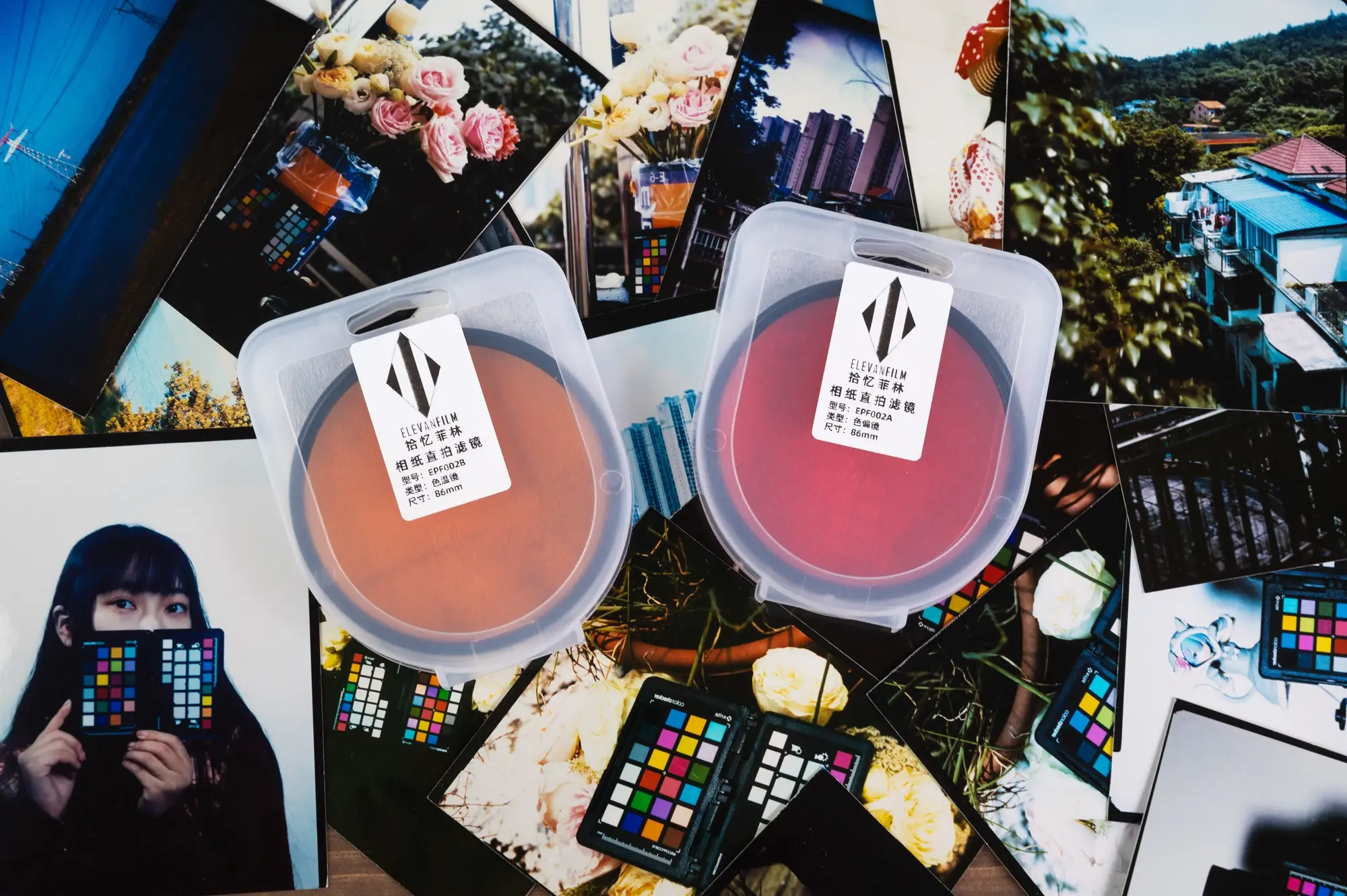
Two laminated optical glass filters, each with a different job. Use them as a pair when exposing RA-4 color paper in the camera.
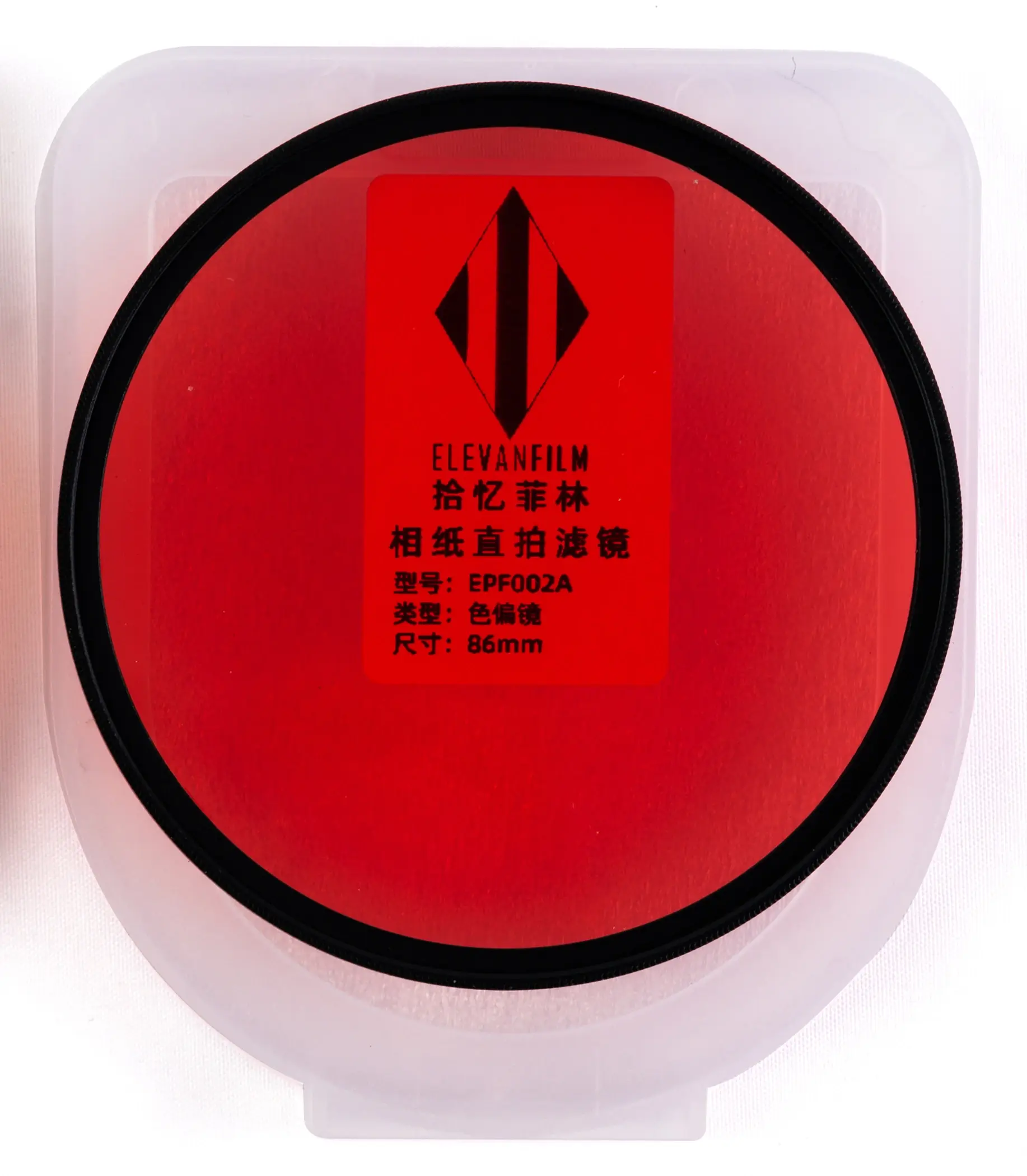
EPF002A
Color cast correction
Helps counter the color cast that can appear when color paper is exposed in-camera.
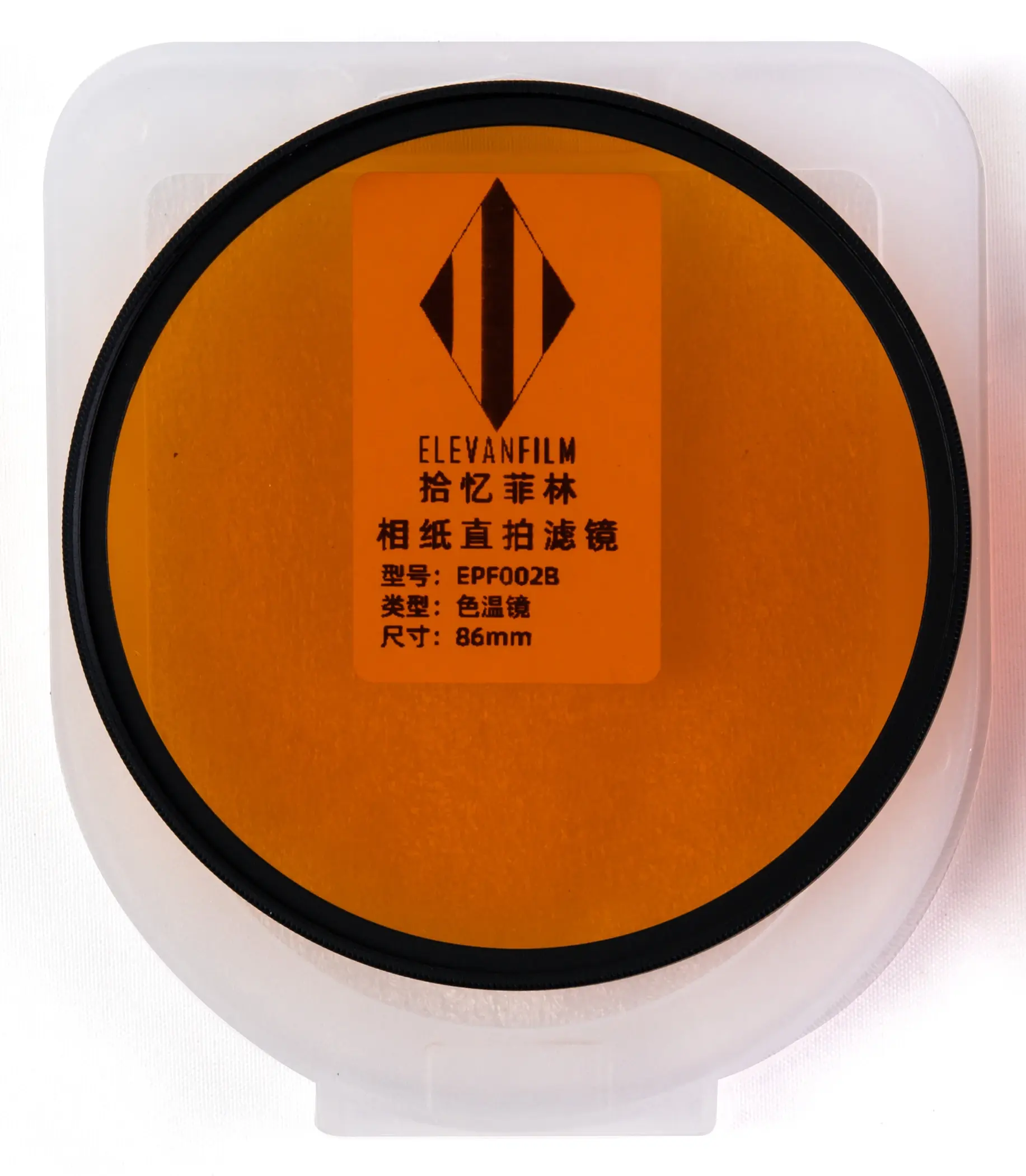
EPF002B · 5500 K
Color temperature correction
Designed for 5500 K daylight-balanced lighting. Use it alongside EPF002A.
86 mm set shown. Select a photo to open a larger view.
- Optical material
- Laminated optical glass
- Frame thickness
- 5 mm per filter (nominal)
- Filter diameters
- 82, 86, 95, and 105 mm
- Standard kit
- Both filters and a cleaning cloth
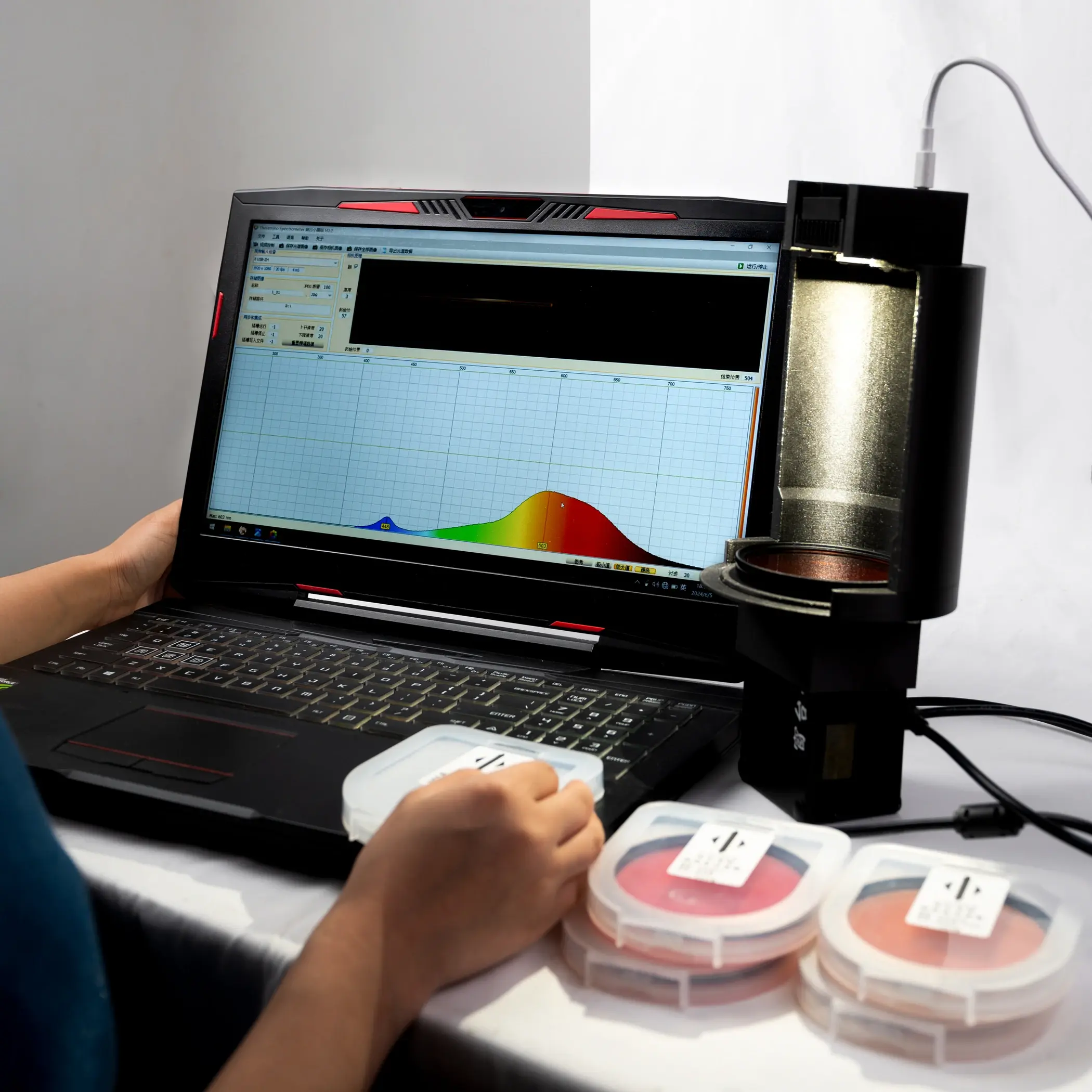
Optical inspection
Optical Quality Control
We use a spectrometer to test each filter under standardized lighting conditions. We check its spectral response against our design specifications.
Print archive
Sample Print Gallery
A closer look at the finished prints, from portraits and color-chart tests to flowers and architecture. Some images show the physical prints, including their paper edges and surface reflections.
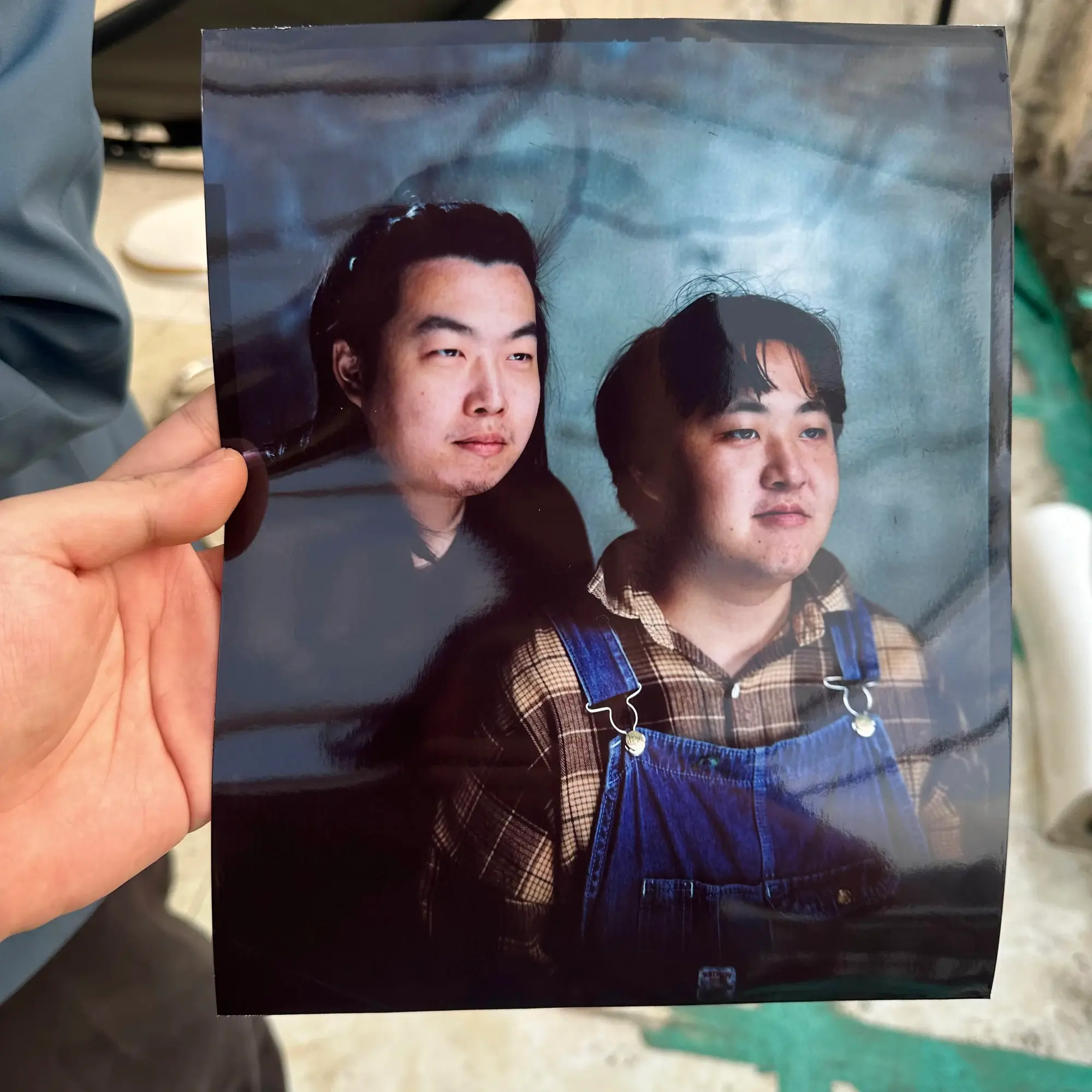
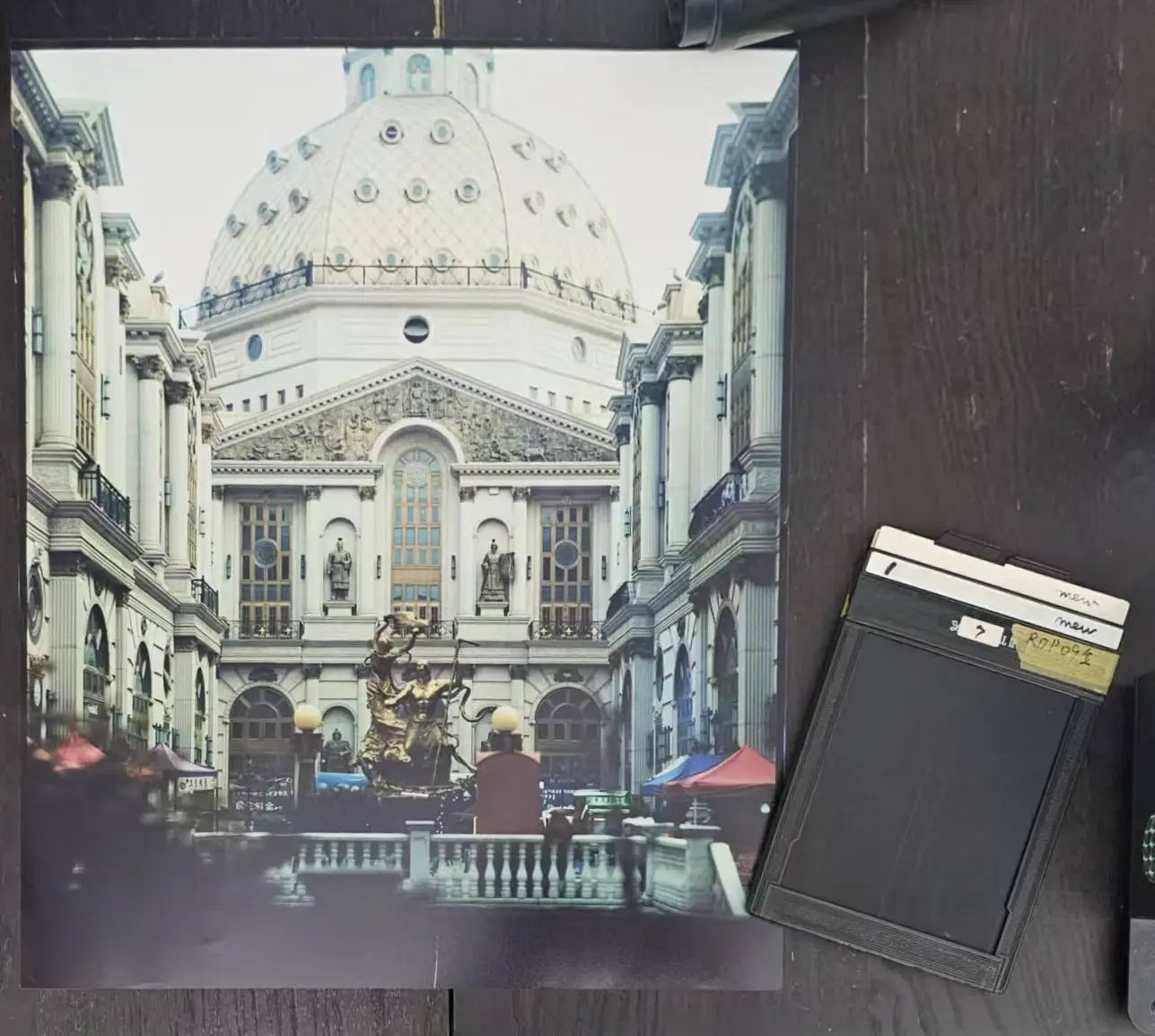
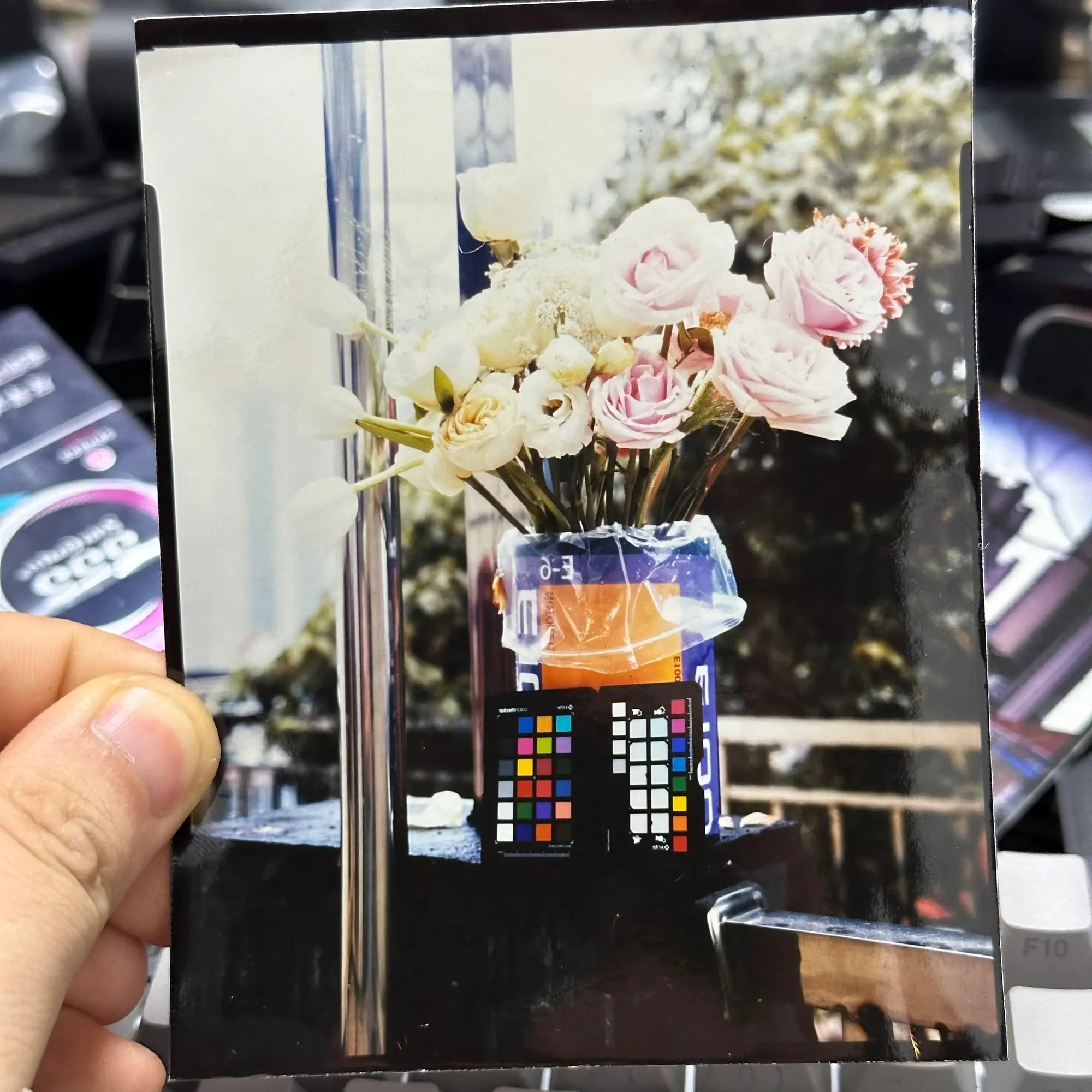
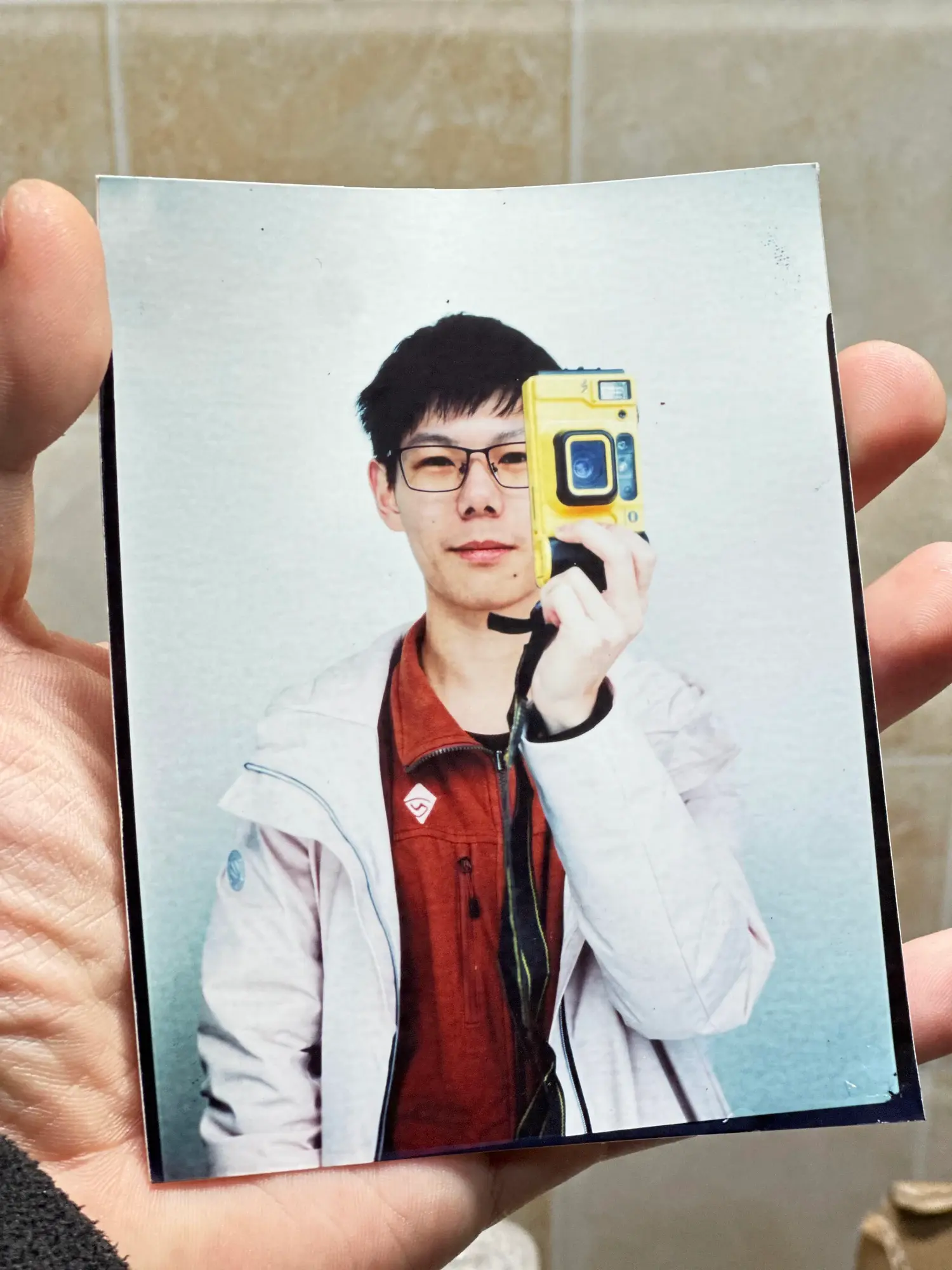
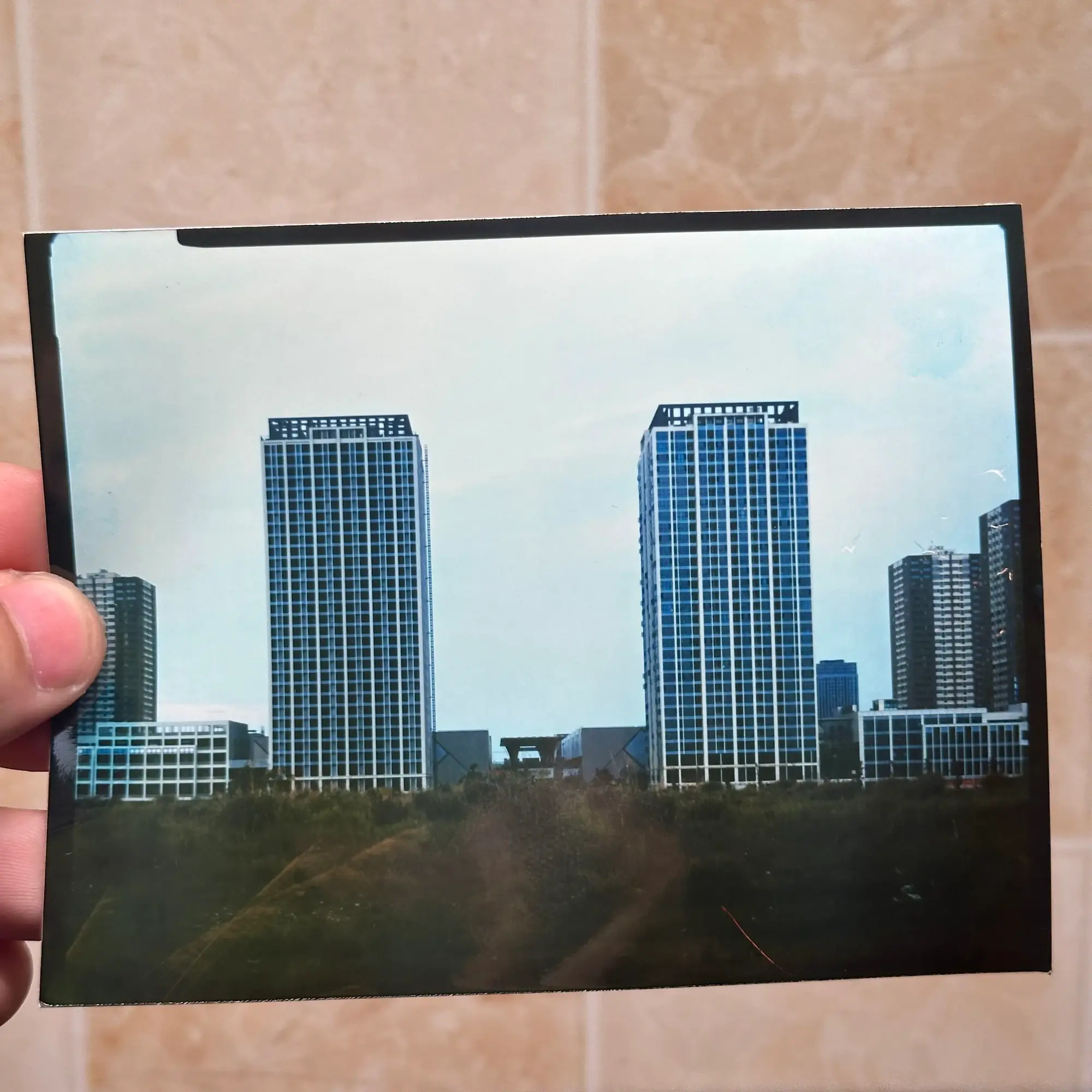
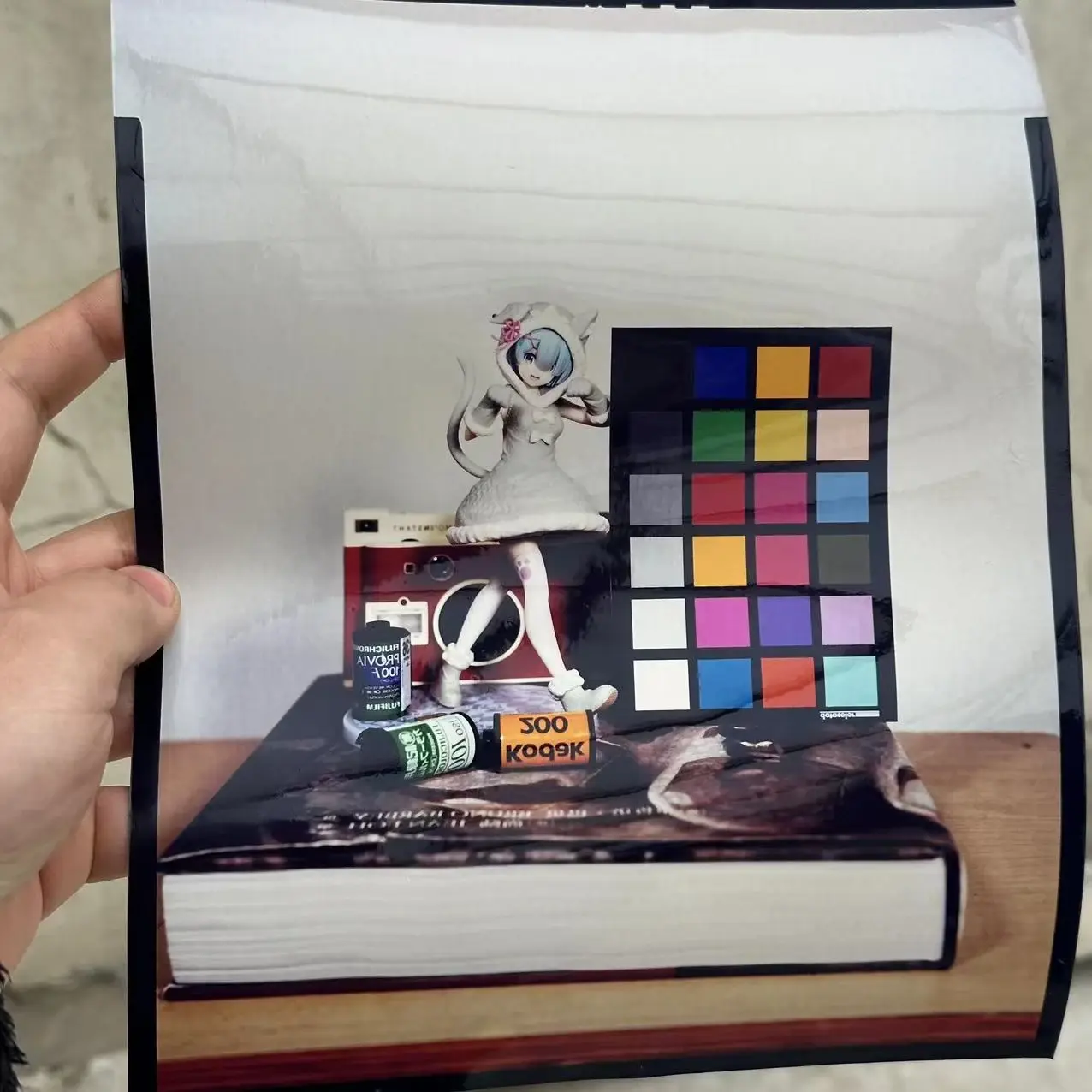
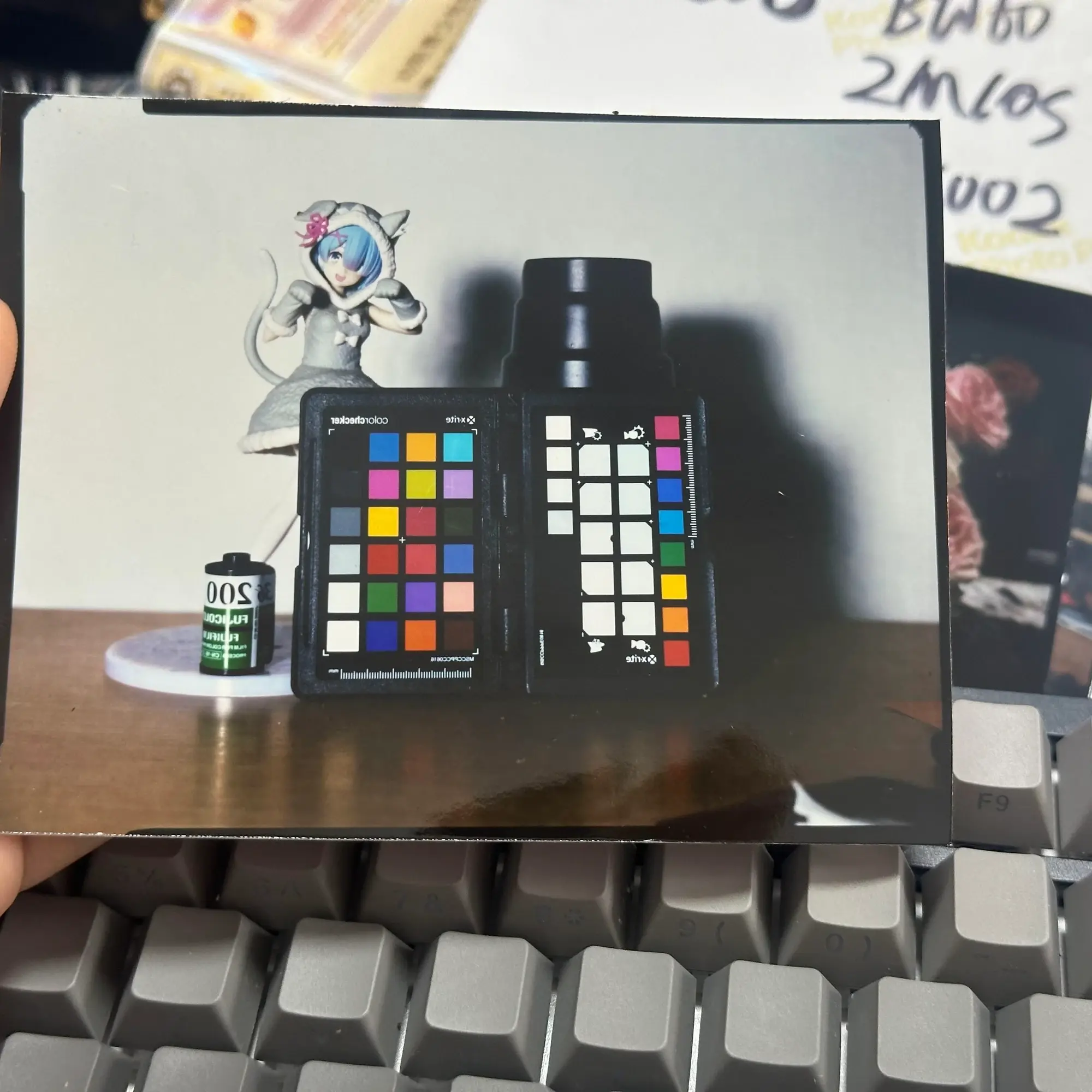
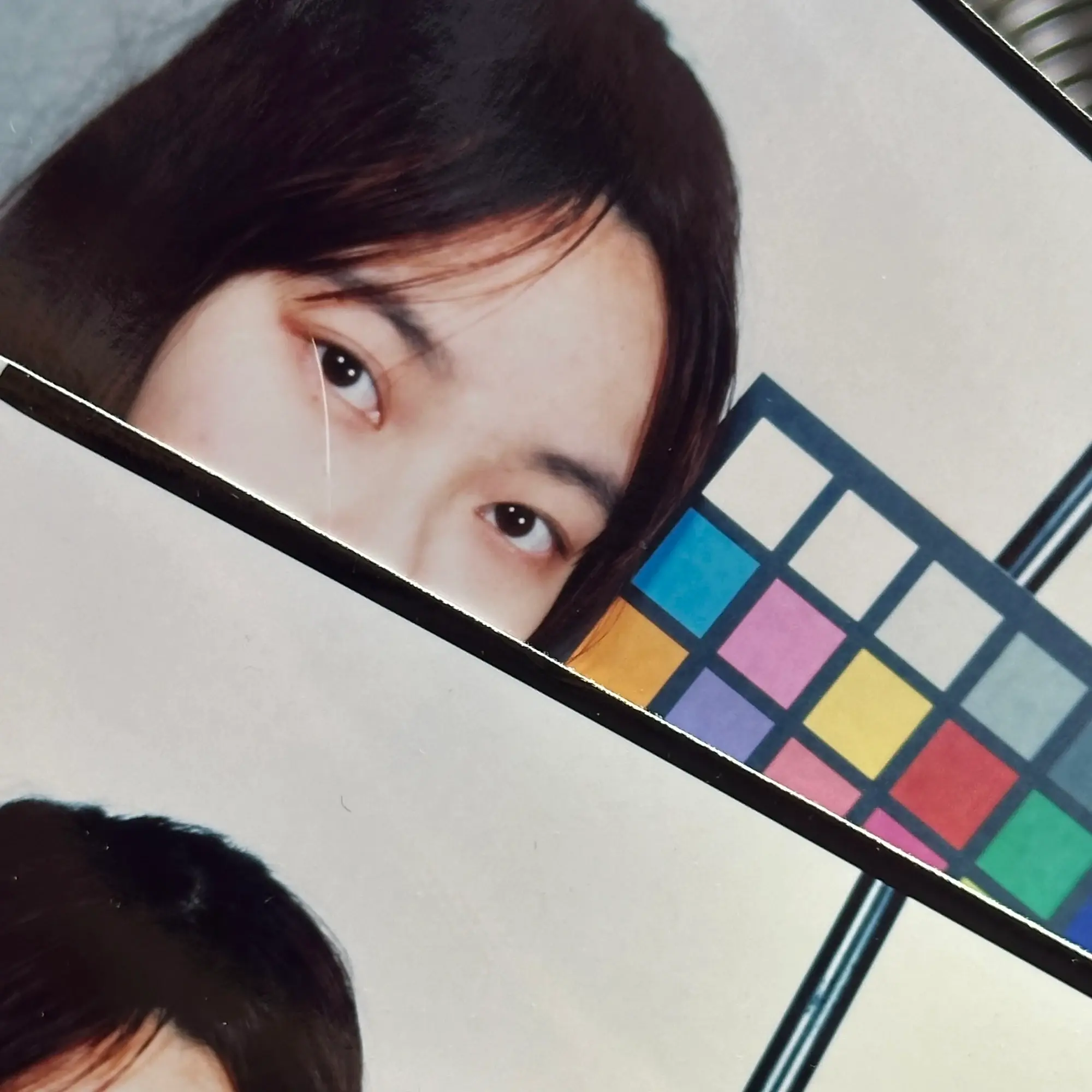
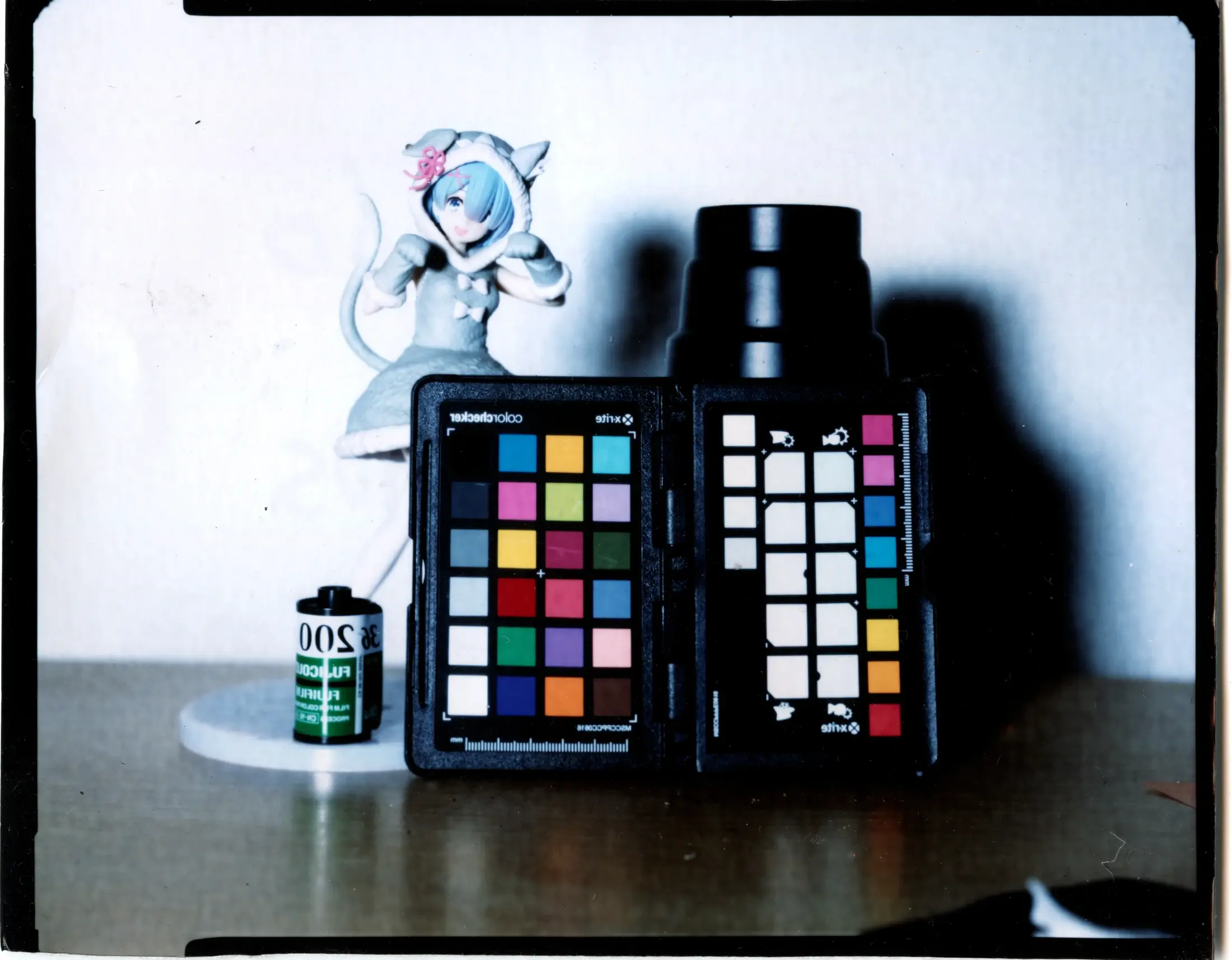
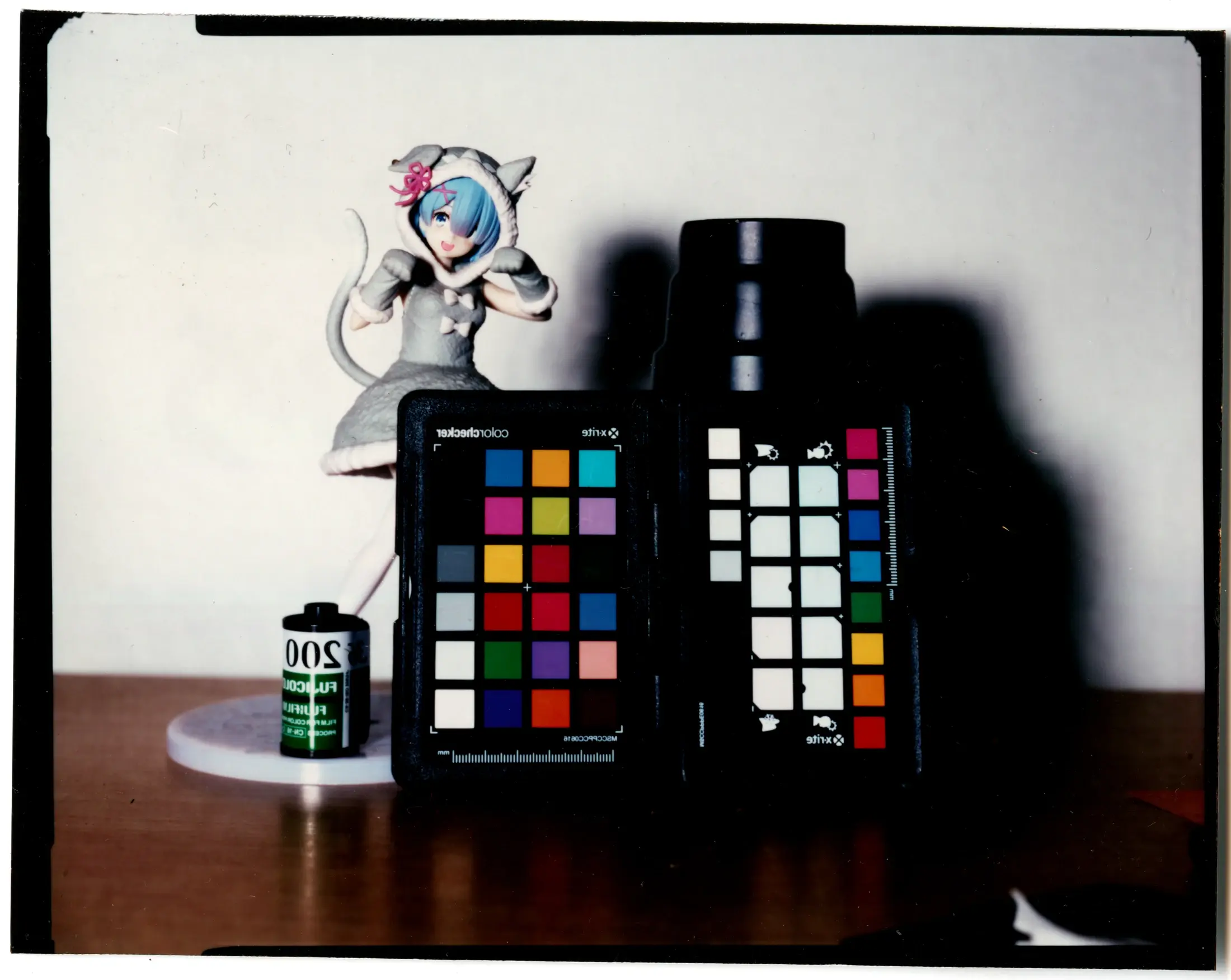


Select a print to view it larger. Color and contrast depend on the paper, light, exposure, and processing.
Shooting on paper
From exposure to print
The two filters work together: A corrects the color cast, and B 5500K handles color-temperature correction under daylight-balanced light.
01 · Load
Load paper instead of film
In darkness, load a sheet of RA-4 color paper into a suitable large-format sheet holder.
02 · Expose
Fit the pair and make a test exposure
Start with daylight-balanced light. Try metering Kodak Endura at EI 4, or Fujifilm 90II under flash at EI 2. These are starting points, not rated paper speeds.
03 · Process
Reversal-process the sheet
The exposed sheet becomes the finished print after reversal processing. Standard RA-4 printing chemistry used as a conventional paper process alone does not produce a positive from an in-camera exposure.
The shoot
Behind the Scenes
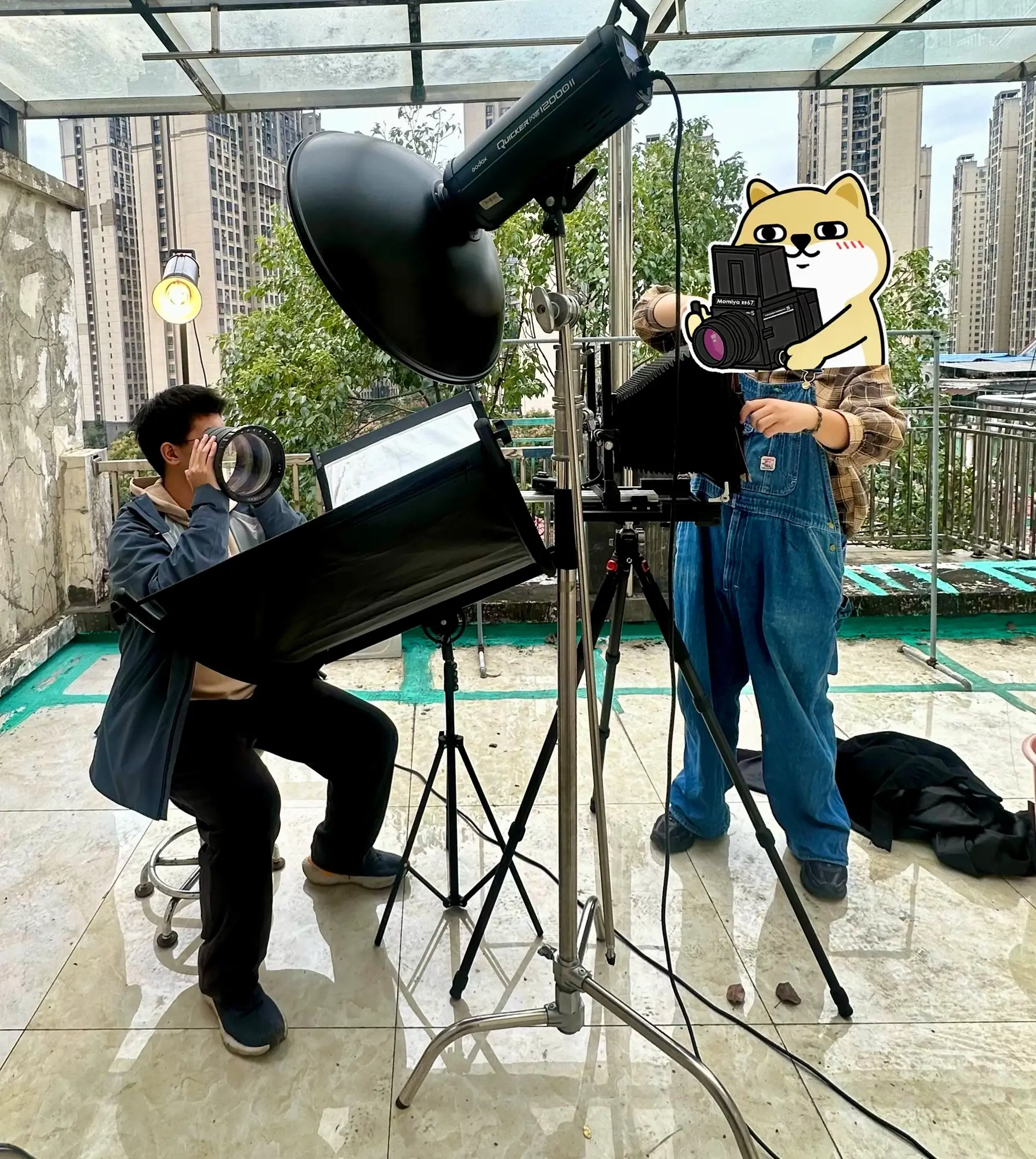
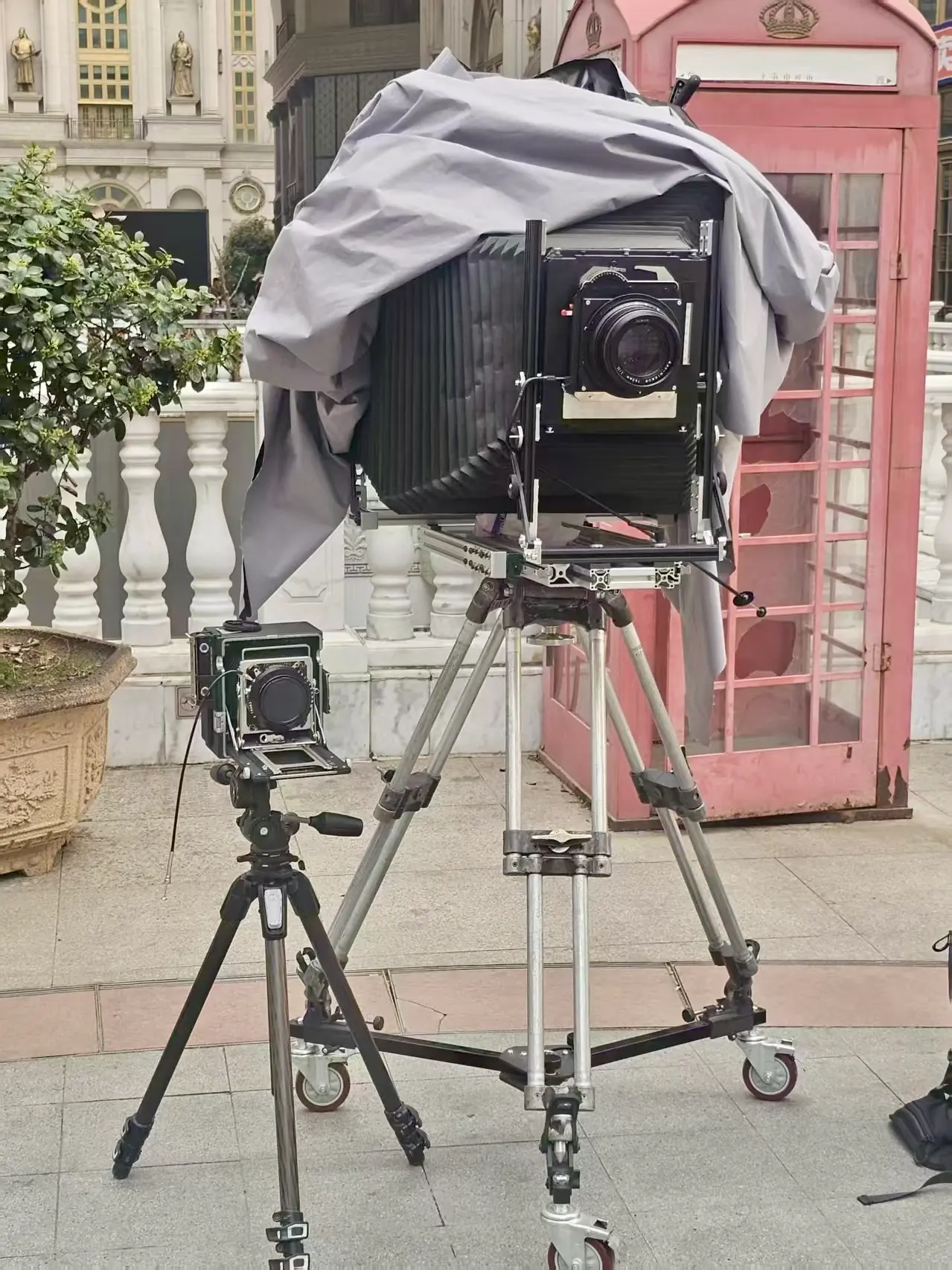
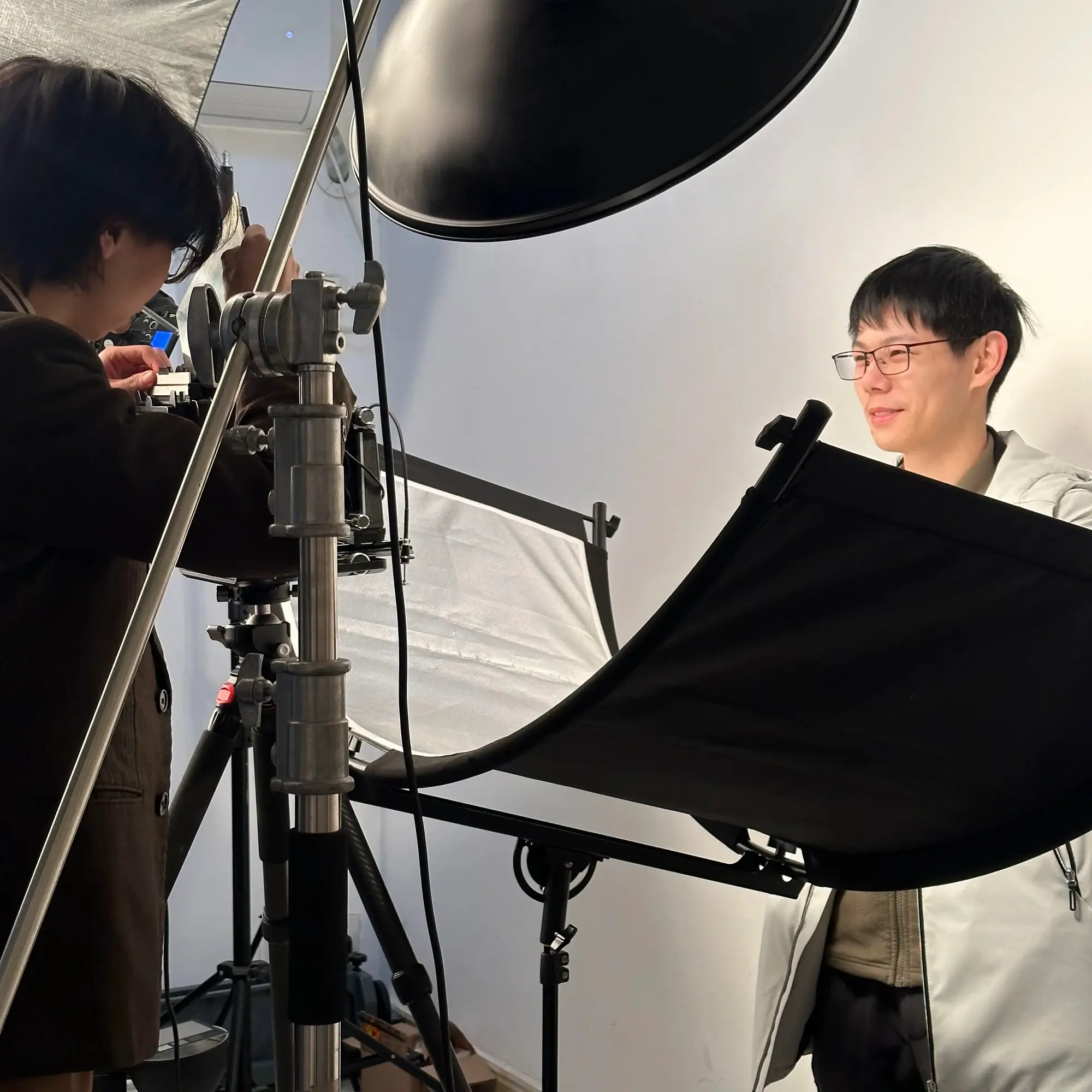
Large-format camera setups in the studio, on a rooftop, and on location.
Buying & shooting notes
Common questions
Do I need a different filter kit for 4×5 and 8×10?
No. The kit size refers to your lens’s front filter diameter; the paper size refers to the camera and holder. Check clearance before stacking filters, especially on a wide-angle lens.
Which paper should I start with?
We’ve tested Kodak Endura and Fujifilm 90II. For portraits, we recommend Fujifilm 90II. Make a test exposure when you change paper, light source, or processing.
What lighting works best with this kit?
The EPF-002 is designed for 5,500 K daylight-balanced lighting. In the studio, we recommend strobes rated at a combined 1,200 Ws (watt-seconds) or more for more consistent exposures. Outdoors, try an overcast or partly cloudy day and work under cloud cover when you can.
Why do some fabrics and leaves turn reddish?
RA-4 paper can pick up near-infrared light when exposed in-camera. Some fabrics and foliage reflect enough of it to show up redder in the print. That’s a characteristic of shooting directly on color paper, not a fault with the filters. For more predictable color, shoot indoors under controlled lighting or outdoors when clouds soften the direct sun.
Can standard RA-4 processing make a positive?
Not by itself. Paper exposed directly in the camera needs a reversal process to produce a color positive. The filters correct color at exposure; they don’t change how the paper develops.
Why can I see a small mark in the glass?
Tiny bubbles or slight crease marks can occur because of a limitation of the lamination process. These minor marks are cosmetic and don’t affect the finished image. If you’re unsure about a mark on your filter, please contact us.




There are no reviews yet.