Description
How it works
From color negative film to color transparencies
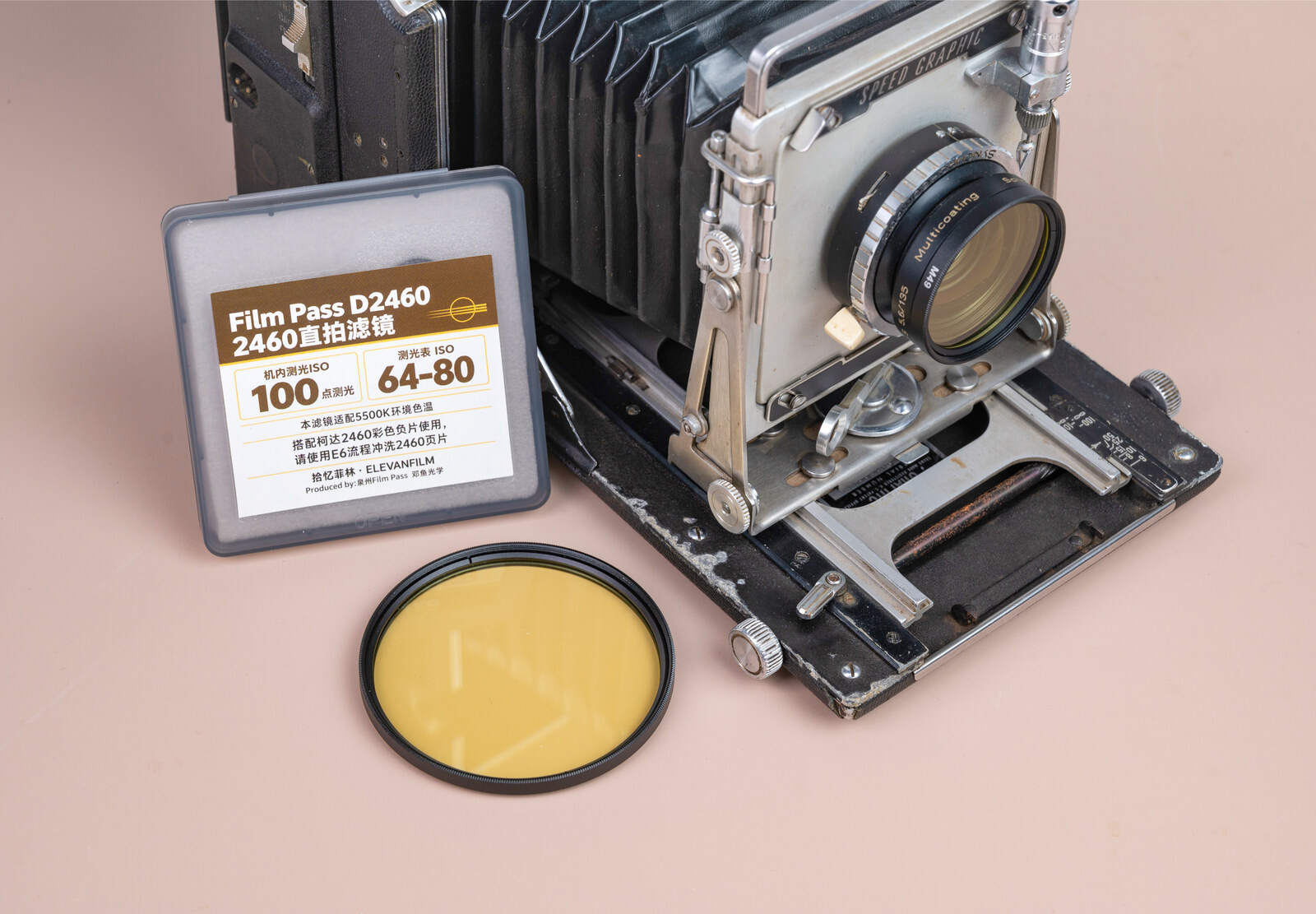
The D2460 is designed for a specific process: shoot Kodak 2460 color negative film through the filter, then develop the film in E-6.
Fit the filter
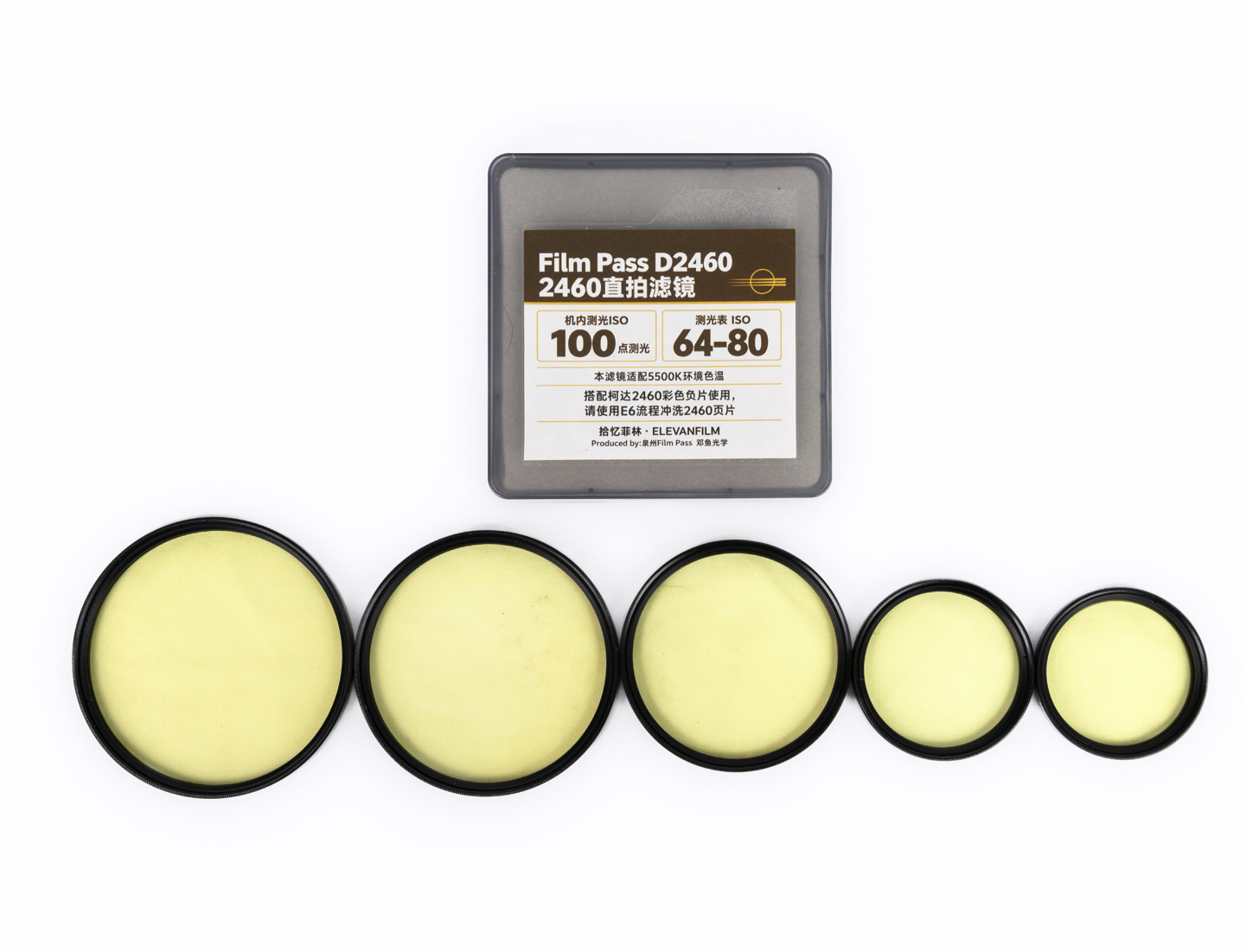
Match the filter to your lens’s filter thread. If you need an adapter, choose a ring with the correct lens and filter sizes.
Meter for daylight
Set your camera’s built-in meter to ISO 100, or a handheld meter to ISO 64–80. Use spot metering and avoid underexposure.
Develop in E-6
After shooting, have the film developed using the E-6 reversal process.
Exposure guide
Daylight exposure at a glance
These starting points apply to daylight at around 5500 K. The best exposure for a given scene may vary with lighting and processing.
STARTING POINTISO 100
Set your camera’s built-in meter to ISO 100 when shooting Kodak 2460 in daylight.
- Handheld meter: start at ISO 64–80.
- Metering: spot metering is recommended. The exposure guide specifies a subject contrast range of approximately ±2.5 EV.
- Exposure: avoid underexposure; the supplied instructions recommend generous exposure.
- Lighting: designed for daylight at approximately 5500 K. The dusk and night photographs show examples under other light sources, where results can vary.
Filter sizes
Find the right size for your lens
Check the filter size marked on the front of your lens, usually shown as Ø52 or 52 mm. Your camera model alone will not tell you the correct filter size.
Using a step-up ring
A compatible step-up ring lets you fit a larger filter to a smaller lens thread. Adapter rings are not included. Check both thread sizes and the exact lens version before ordering.
Check clearance with wide-angle lenses and 4×5 cameras
Filter thickness, lens hoods, camera movements, center filters, and bayonet or square filter systems can affect clearance or cause vignetting. If you’re unsure, send us the full lens model and details of your filter setup so we can check.
| Thread size | Price | Shipping |
|---|---|---|
| 49 mm | $47 | Included |
| 52 mm | $47 | Included |
| 67 mm | $50 | Included |
| 77 mm | $53 | Included |
| 82 mm | $56 | Included |
Sample images
From daylight to after dark
The first three photographs show the finished transparencies and D2460 filter. The five film samples that follow were shot on Kodak 2460 sheet film through the D2460, developed in E-6, and scanned on an Epson GT-X970.
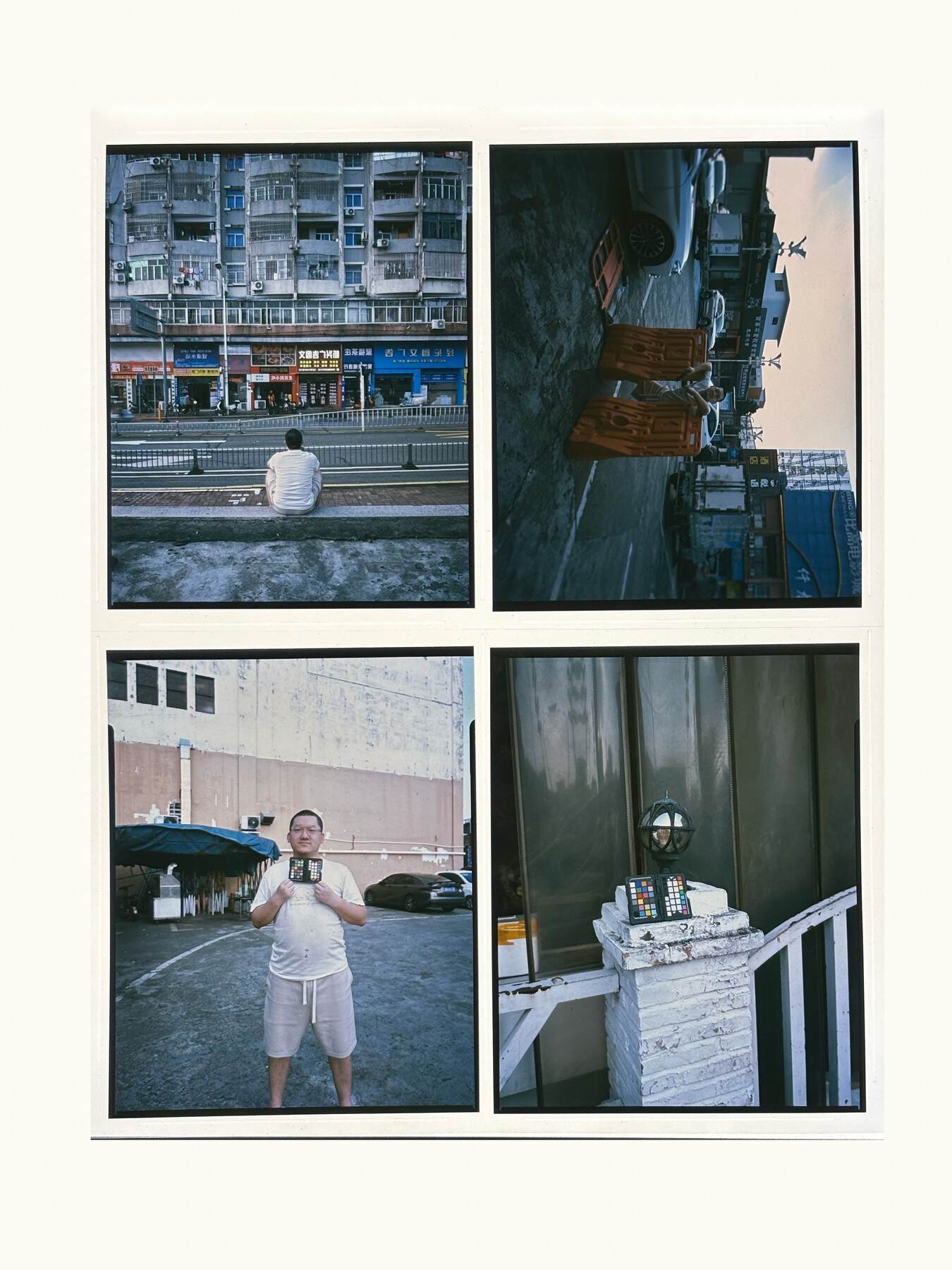
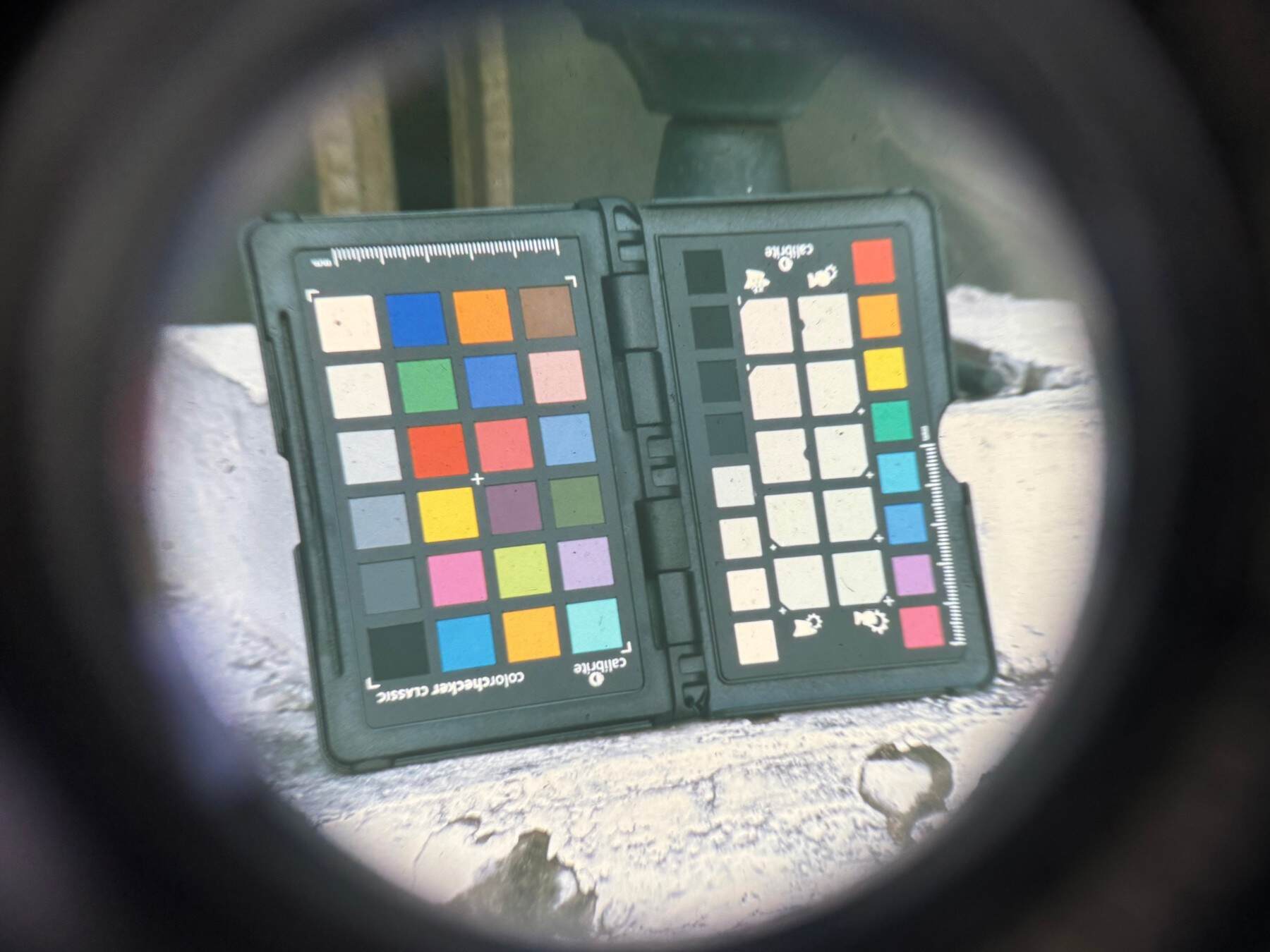
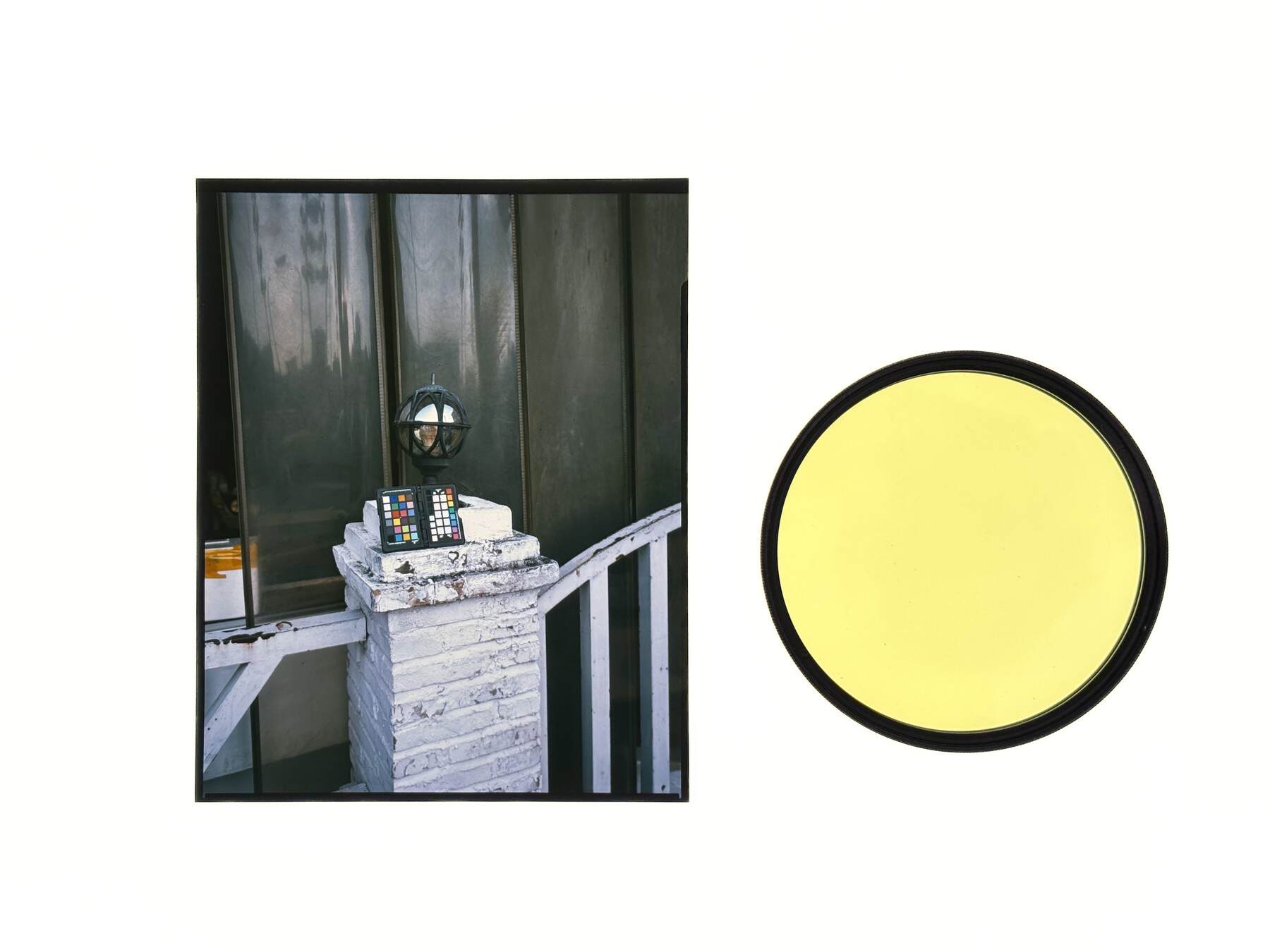
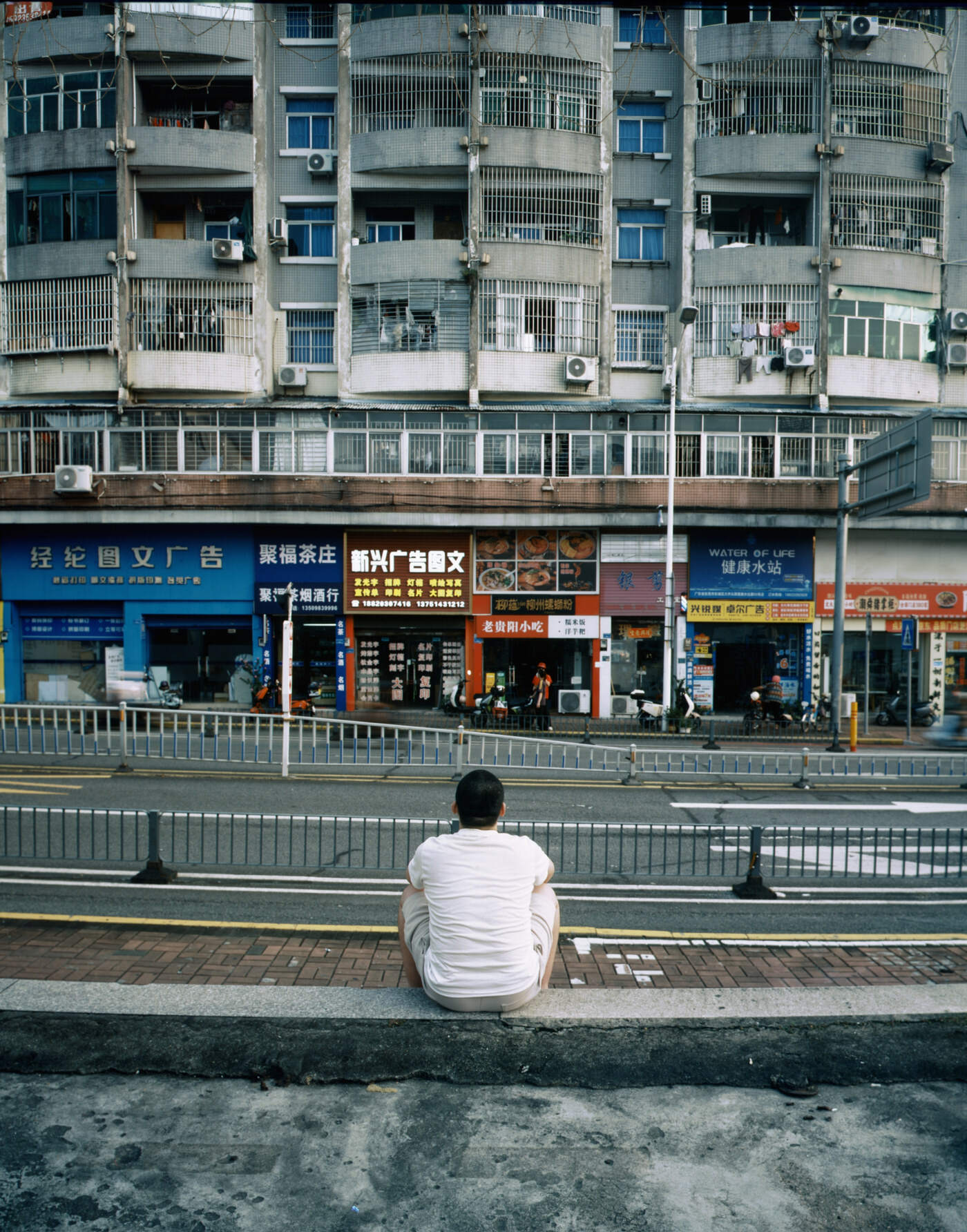
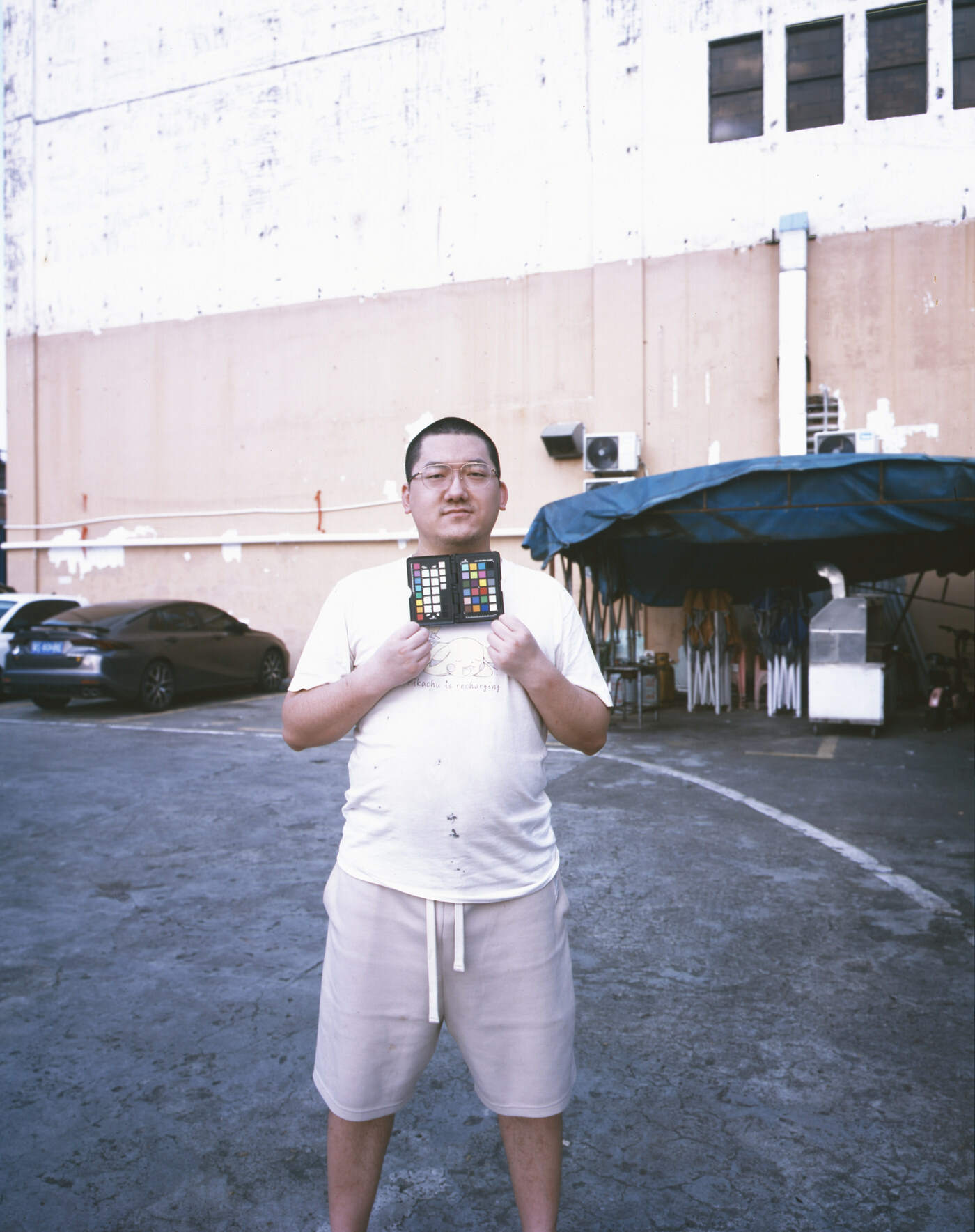
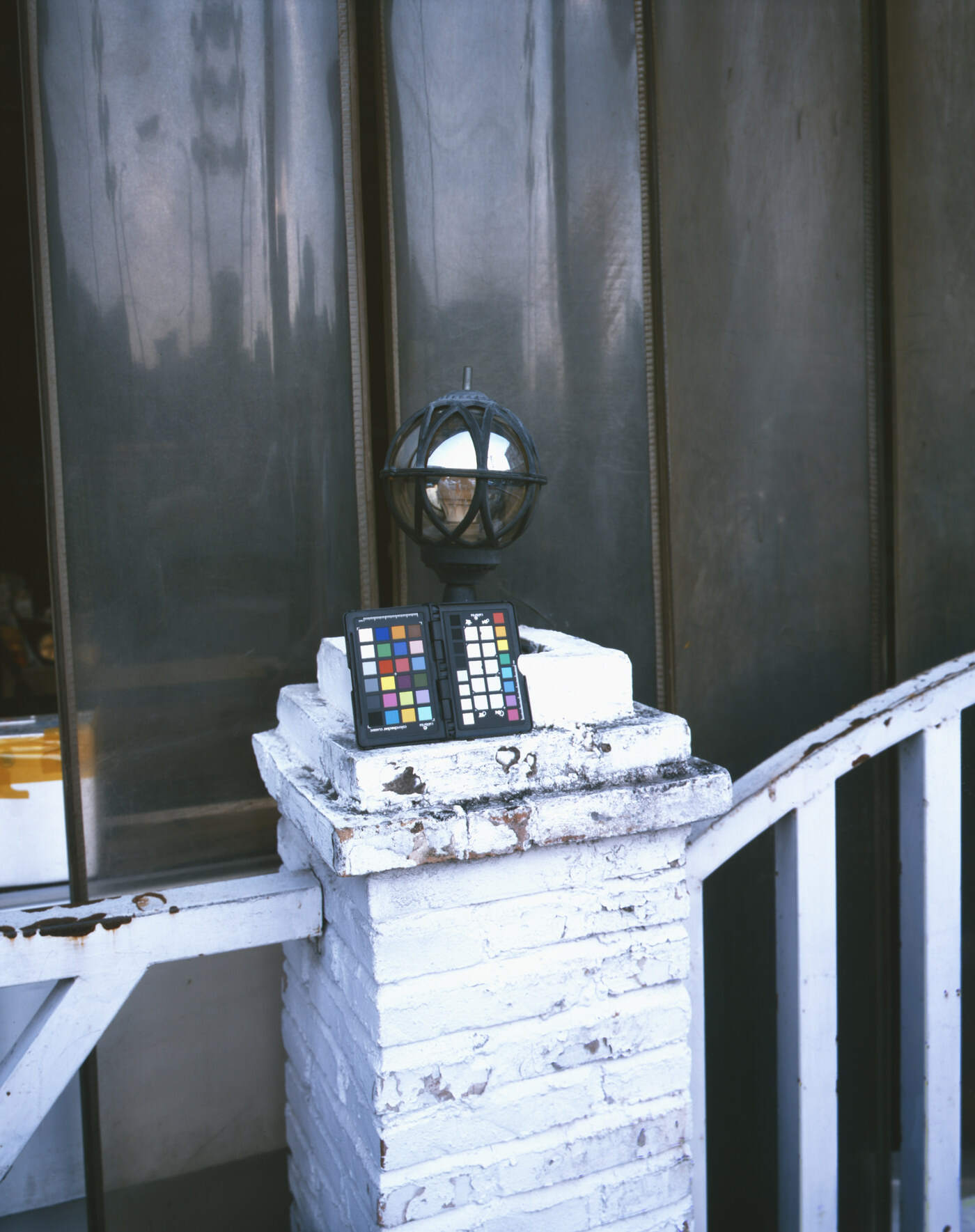
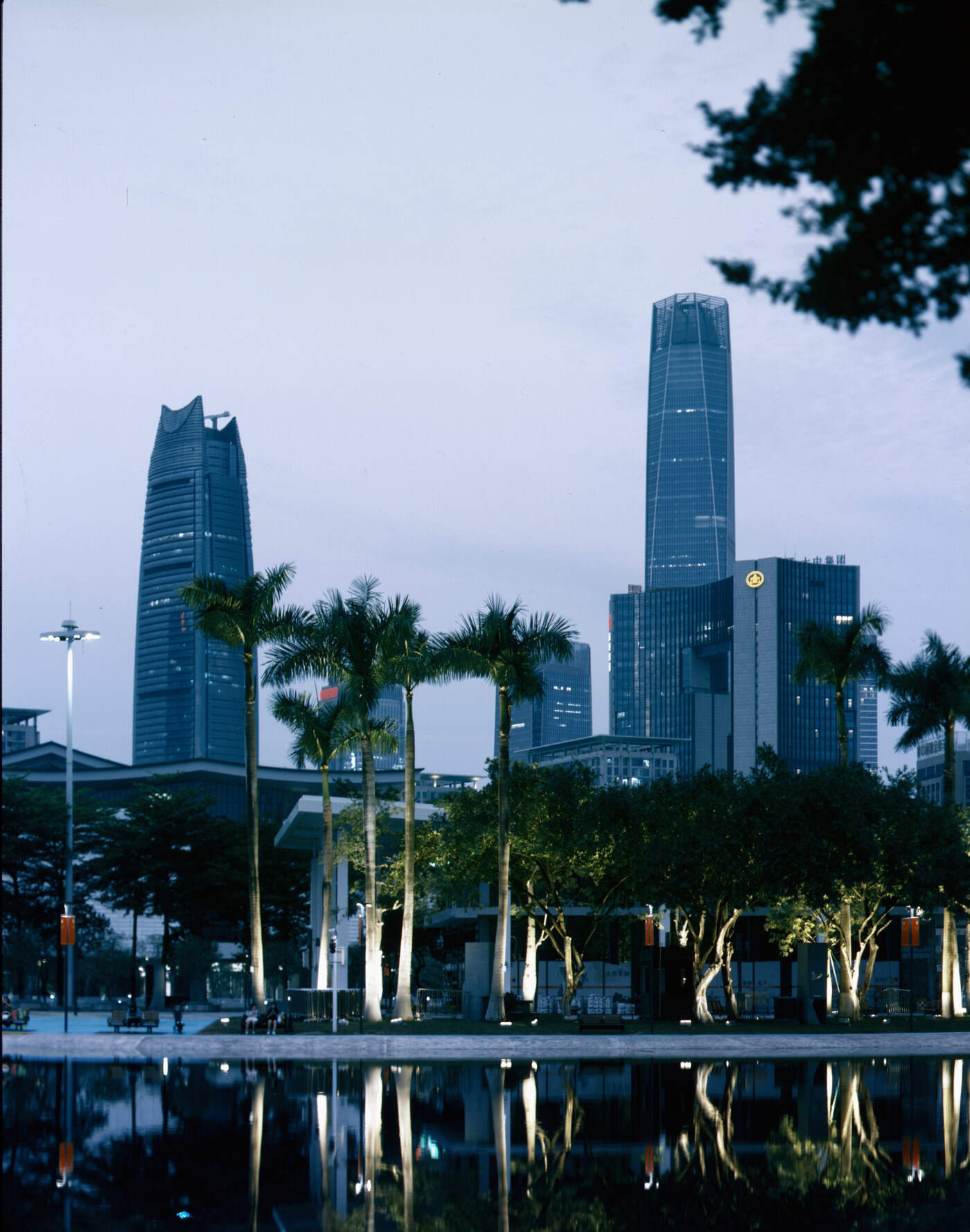
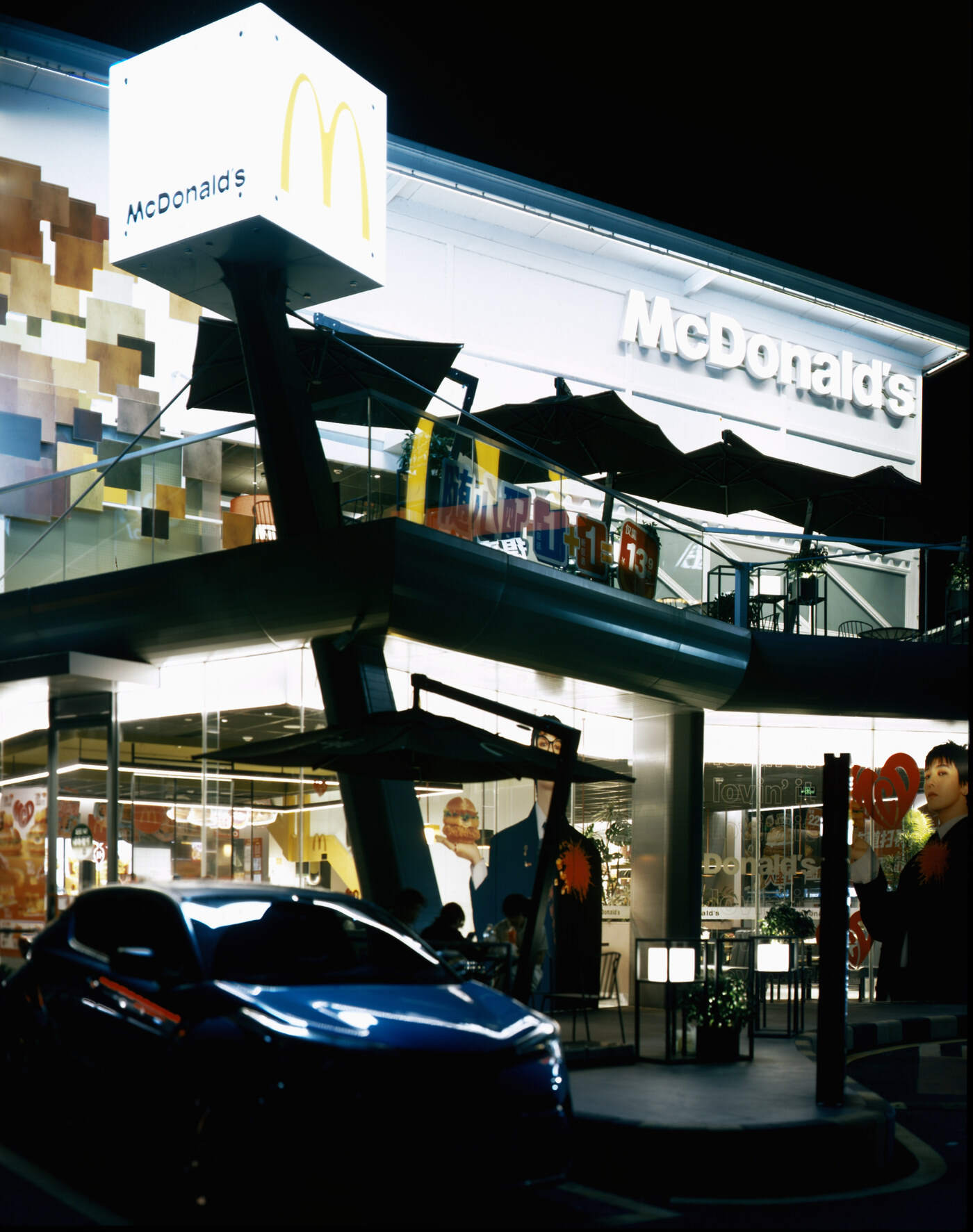
Color and density will vary with film batch, exposure, lighting, processing, and scanning or viewing conditions.
The filter
Optical glass for the 2460 process
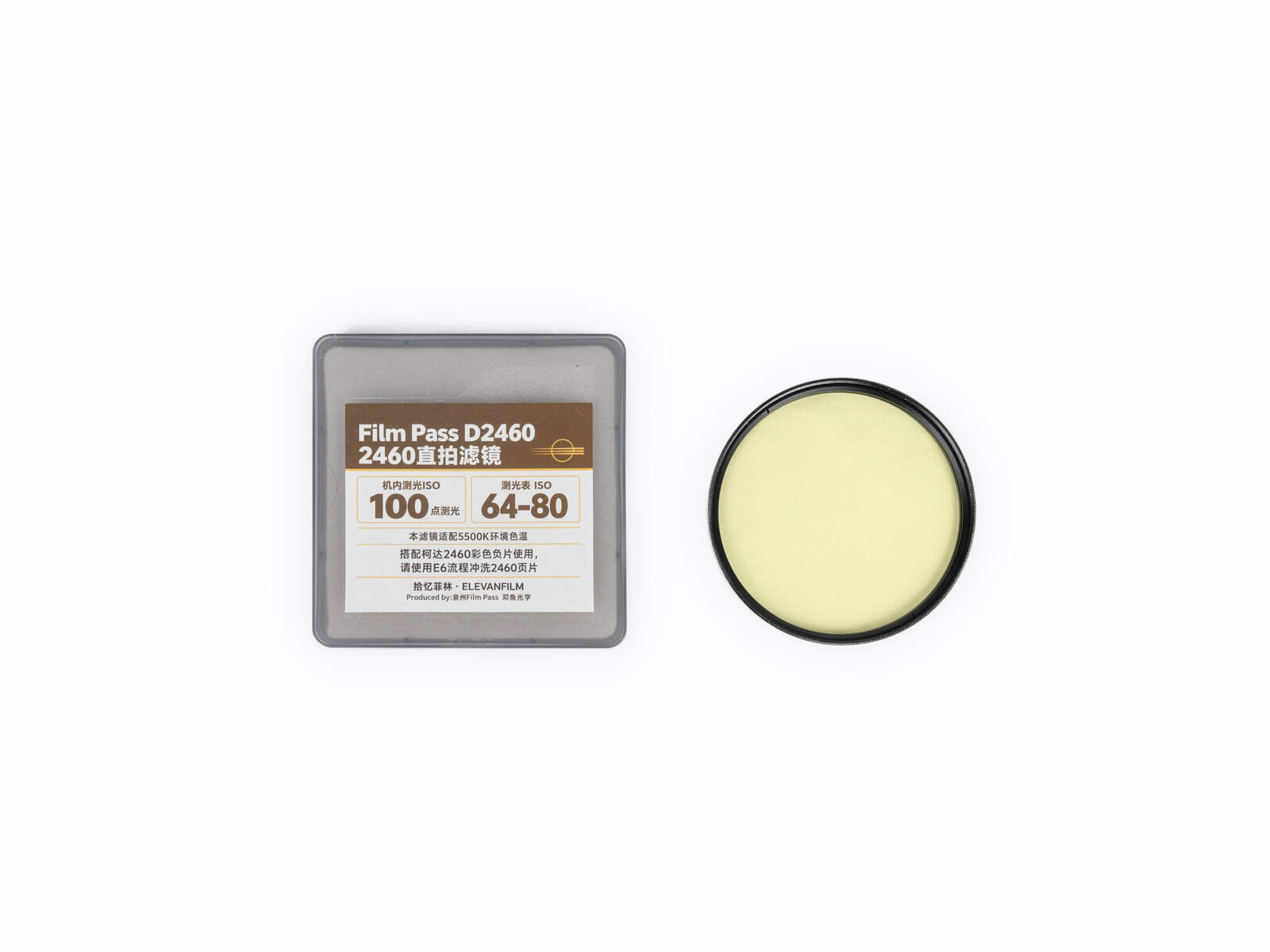
The D2460 uses absorptive optical glass, with a specified light transmission of approximately 92%. Its optical characteristics are tailored to the Kodak 2460 and E-6 process described here.
Remove loose dust with a blower, then clean the glass with a lens cloth. Handle with care, protect it from impacts, and never rub grit across the surface.
Specifications
Product details
| Product | Film Pass D2460 reversal filter |
|---|---|
| Optical material | Absorptive optical glass |
| Specified light transmission | Approximately 92% |
| Film and process | Kodak 2460 color negative film, developed in E-6 |
| Available thread sizes | 49 mm, 52 mm, 67 mm, 77 mm and 82 mm |
| Recommended lighting | Daylight at approximately 5500 K |
| Included | One D2460 filter in your selected size |
| Shipping | Included in the price |
Before you shoot


There are no reviews yet.