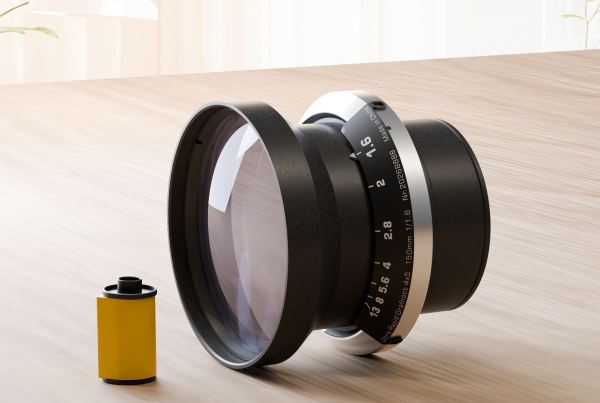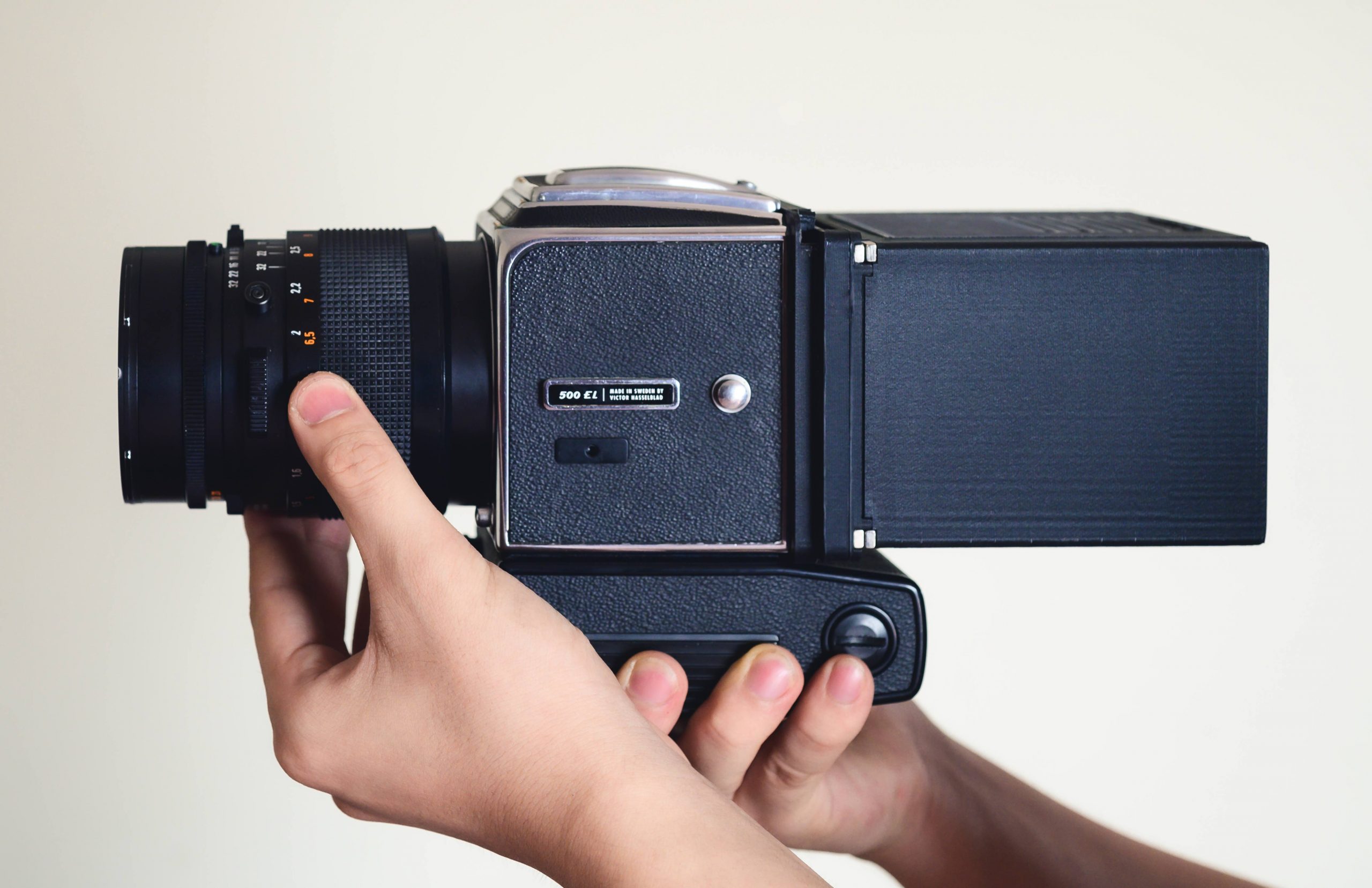

Shooting color slide film such as E100 or Provia can be costly. The Elevanfilm D2460 pairs Kodak 2460 color-negative film with a dedicated filter and an E-6 workflow to produce color transparencies. Using US and UK retailer prices checked on 3 November 2026, 2460-based Pro100 worked out to US$7.85–8.30 per 4×5 sheet after allocating the reusable filter across the first 20 sheets. That is approximately 46–49% less per sheet than the E100 film-only listing at about US$15.43 per sheet.
From aerial negative to color transparency
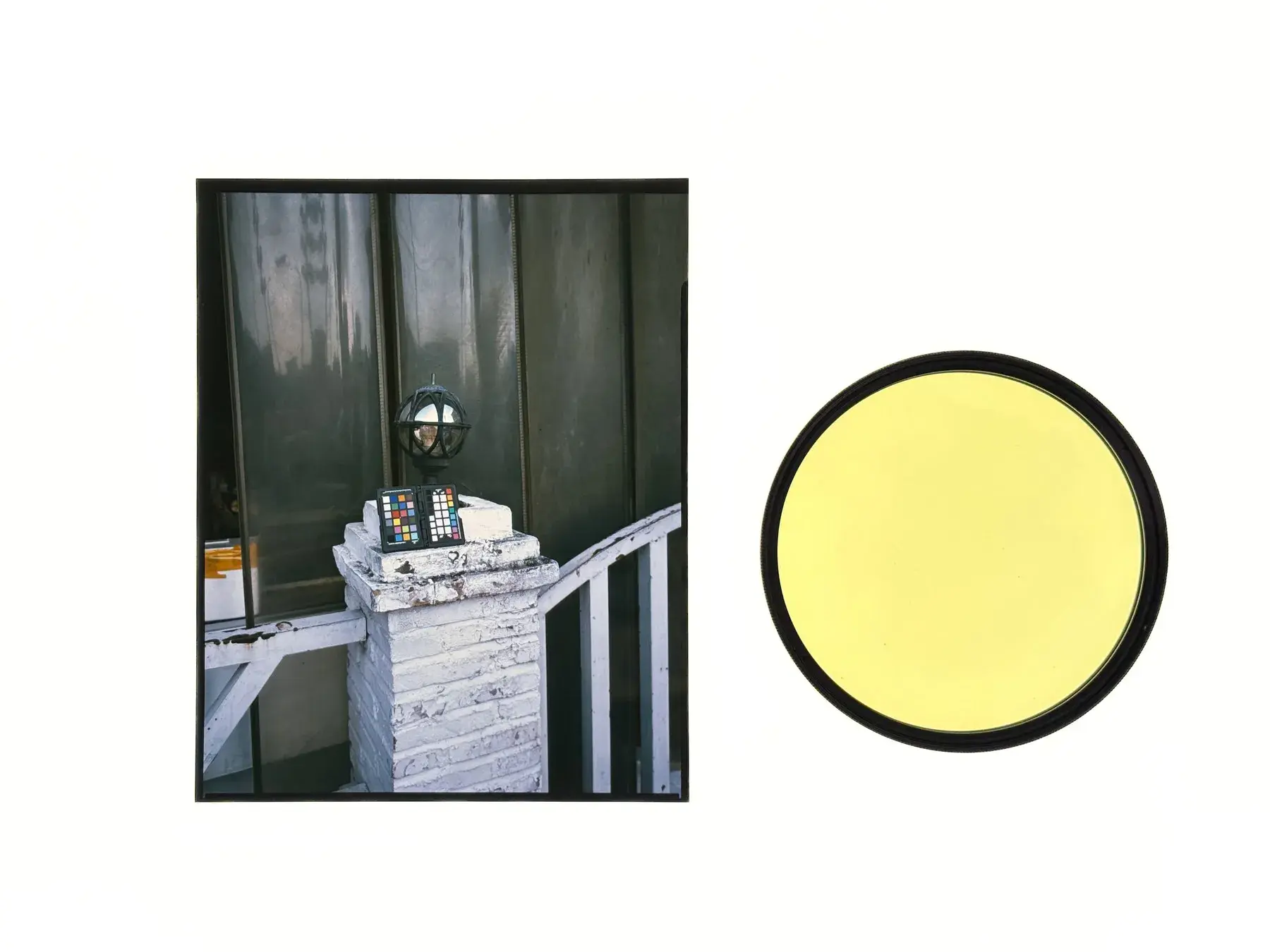
Kodak describes AEROCOLOR IV Negative Film 2460 as a daylight-balanced, very fine-grain color-negative aerial film. Its technical data sheet lists Kodak Process AN-6 and C-41 and says the film was designed for color-negative processing only. E-6 is not among its published process recommendations. The D2460 explores a different route: expose 2460 through the dedicated filter, then process it in E-6 to make a color transparency.
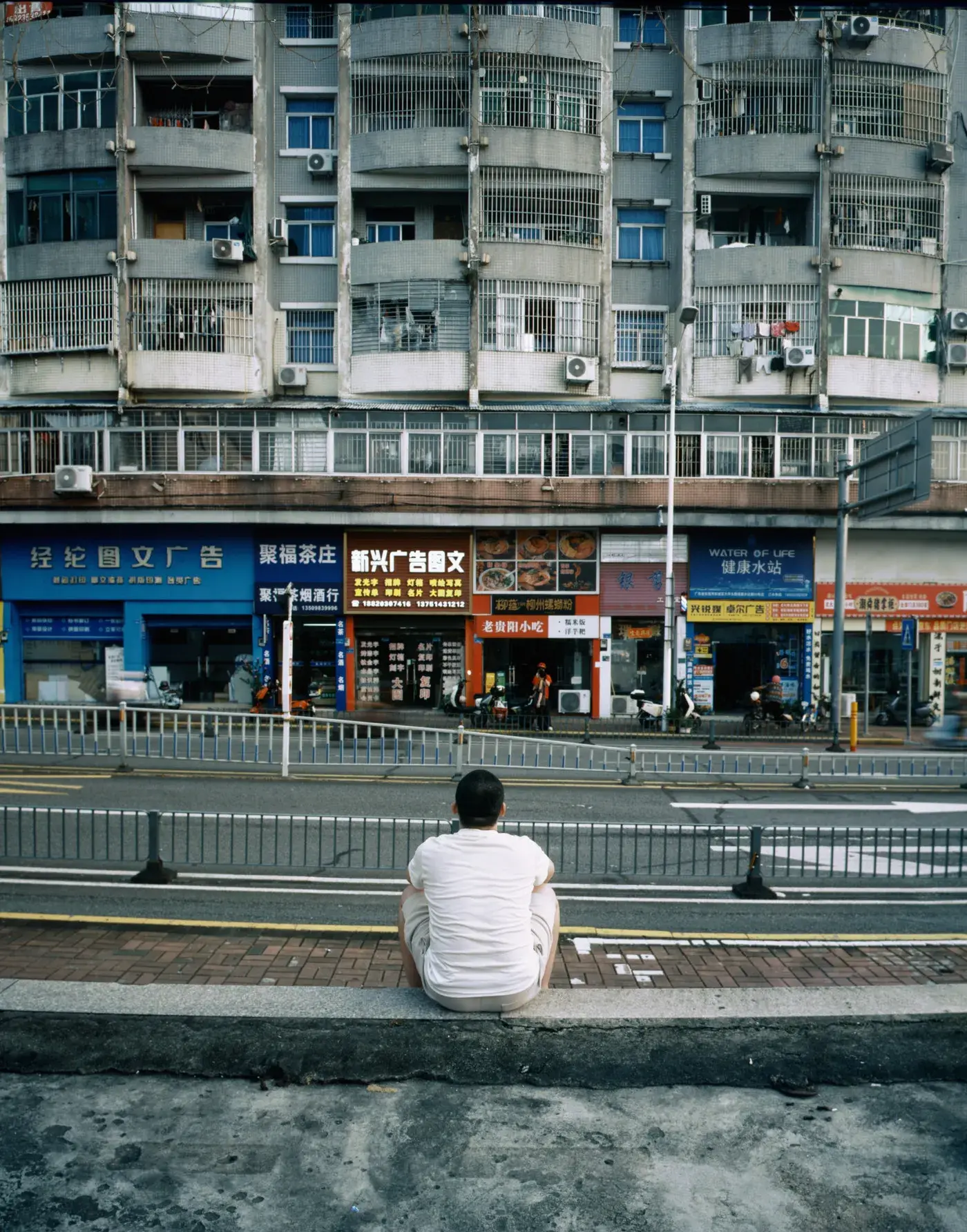
The distinction matters. The D2460 is not a general color-correction filter, and this is not a process recommended in Kodak’s data sheet. Elevanfilm has tested this specific combination for photographers interested in working with 2460 as a transparency. The sample frames below were shot on Kodak 2460 through the D2460, processed in E-6, and scanned on an Epson GT-X970.
Why make a transparency?
With a color negative, the usual next step is scanning or printing. Reversal processing produces a positive image on a transparent base: a frame you can examine on a light table, scan as a positive, or keep as a physical original. For many film photographers, the finished transparency is part of the appeal.
For large-format photographers and darkroom experimenters, this is another way to work with an unusual stock. Kodak developed 2460 for aerial imaging rather than everyday pictorial photography. The D2460 workflow provides a defined starting point: one film, a dedicated filter, and exposure guidance for initial tests.
What the numbers look like
Price snapshot checked on 3 November 2026. These are retailer listings, not a universal market average. The 4×5 comparison below covers film and the D2460 filter only; E-6 processing, shipping, tax, and any lab surcharge are not included.
| 4×5 material | Price basis | Cost per sheet |
|---|---|---|
| Kodak Ektachrome E100 | £115 for 10 sheets; sold out when checked | £11.50, about US$15.43 |
| Reflx Lab Pro100, made from Aerocolor 2460 | US$110 for 20 sheets; 4×5 variant available when checked | US$5.50 |
| Pro100 plus one D2460 filter, with the filter cost allocated across 20 sheets | US$110 film plus a US$47–56 reusable filter | US$7.85–8.30 |
The E100 figure converts at £1 = US$1.3419, the 2 November 2026 reference rate. At these listed prices, a 20-sheet Pro100 box plus the D2460 works out to approximately 46–49% less per sheet than the E100 film-only listing. At these prices, the film savings offset the filter’s purchase price after roughly five to six sheets, before processing, shipping, or tax. The D2460 is reusable, so later sheets do not carry that same initial filter allocation. This is a materials-cost comparison, not a promise that 2460 will look like E100 or Provia: the films have different emulsions and color rendering.
For a separate 120-format comparison, Film Photography Project listed one roll of E100 at US$16.99; the selected variant was available when checked. Reflx Lab listed three 120 rolls of Pro100, respooled from Aerocolor 2460, for US$39, or US$13 per roll; the selected variant was also available, and the listing says E-6 cross-processing produces slide film. Analogue Wonderland listed Provia 100F 120 at £70 for five rolls (£14 per roll; sold out when checked). At the same exchange rate, that is about US$18.79 per roll. As an illustrative materials-cost comparison, allocating the D2460’s purchase price across 20 Pro100 rolls brings the film-and-filter total to about US$15.35–15.80 per roll before E-6 processing: roughly 7–10% less than the E100 roll listing and 16–18% less than Provia’s listed price. The sample images in this post document Kodak 2460 sheet-film use, rather than validation of the 120 workflow. Confirm lab acceptance and your specific setup before trying the roll-film version. These comparisons use listed prices for 120 film and do not imply that all three stocks produce the same color rendering. Availability and prices change, so check the retailer pages before buying.
Made for one film-and-process pairing
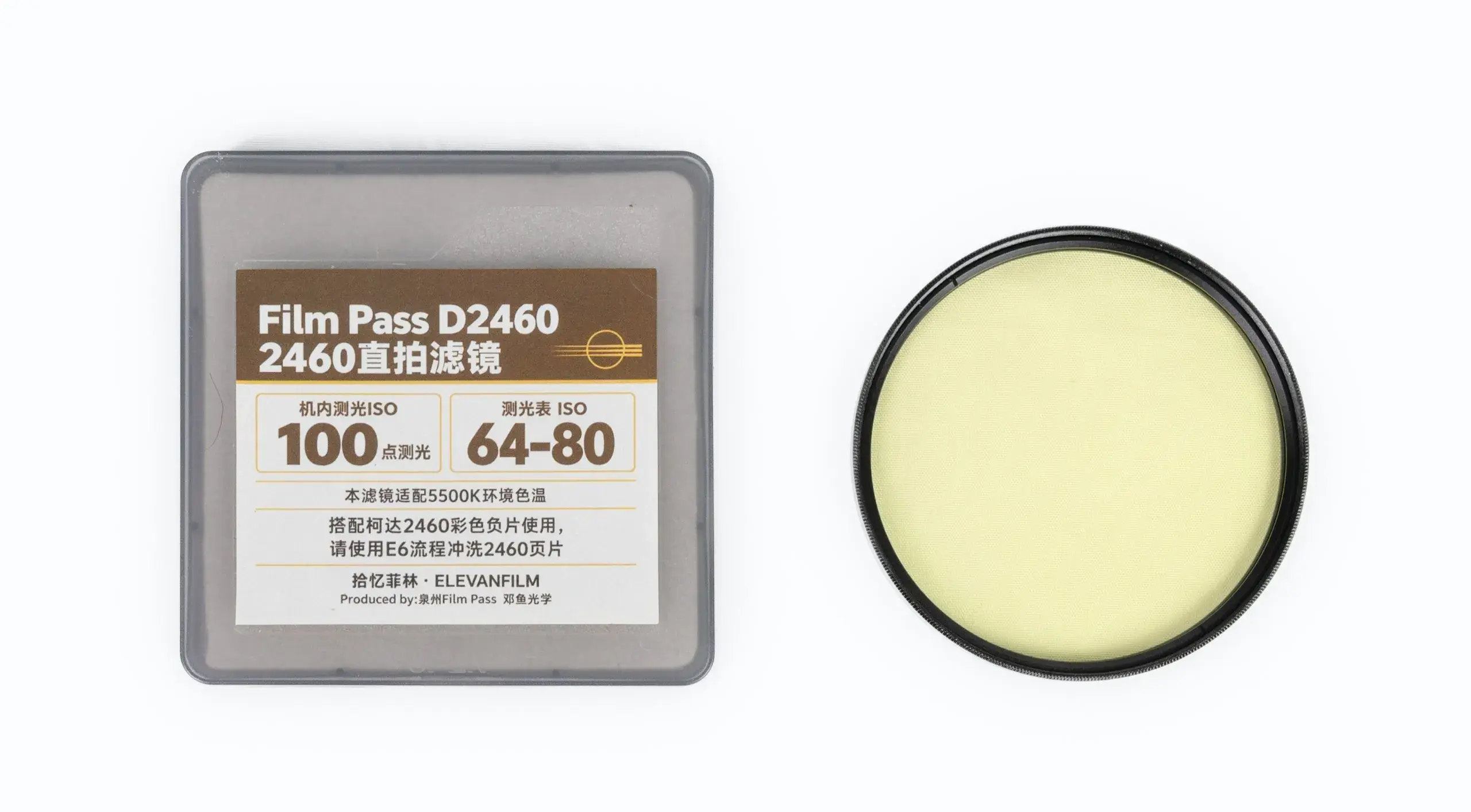
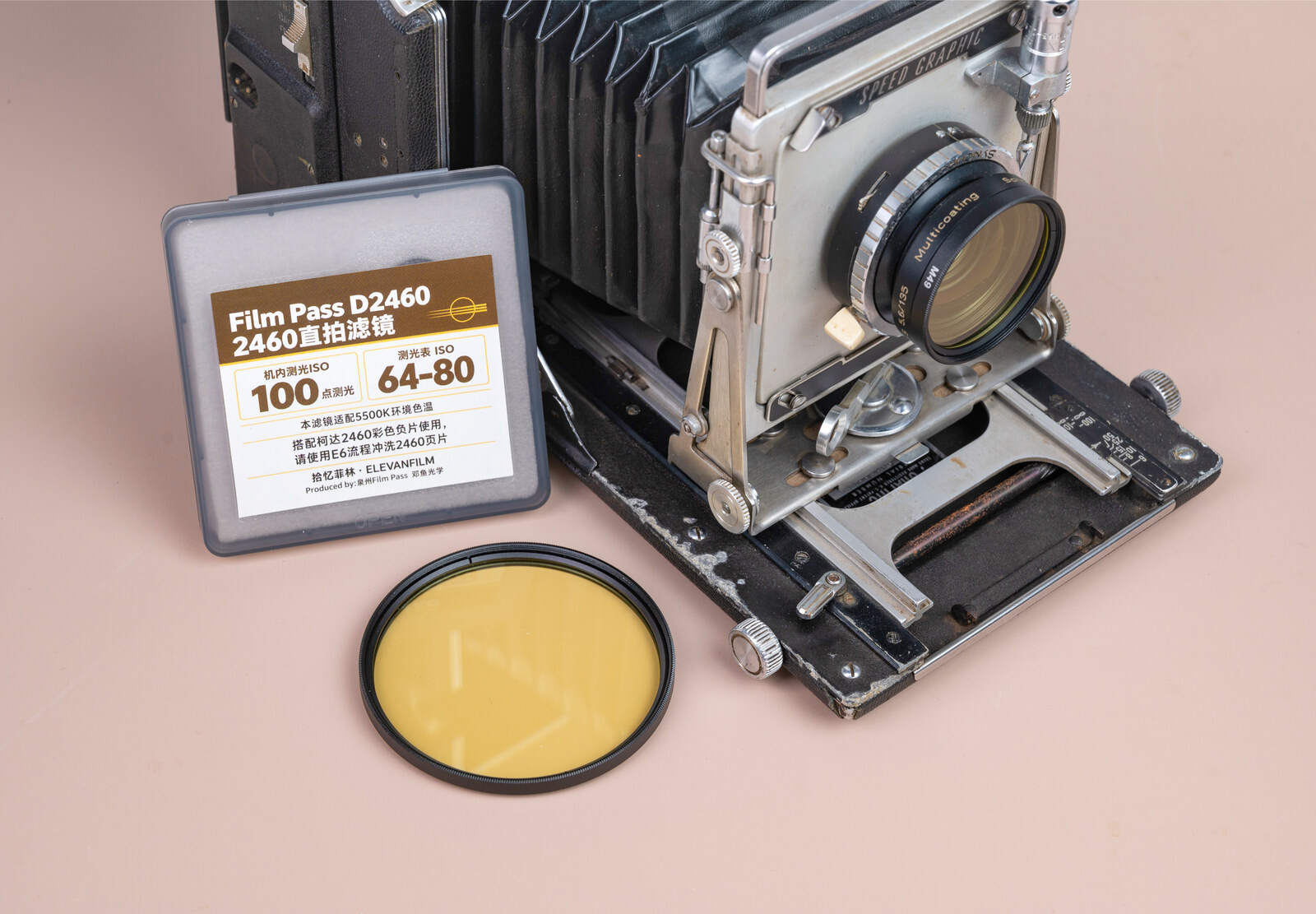
The D2460 uses absorptive optical glass with a specified light transmission of approximately 92%. It is available in five filter-thread sizes: 49, 52, 67, 77, and 82 mm. Its optical characteristics and exposure guide are tailored to Kodak 2460 and the E-6 workflow described here. Use with other film stocks falls outside its intended application.
In daylight around 5500 K, the supplied workflow guide recommends starting with ISO 100 on an in-camera meter, or ISO 64–80 on a handheld meter. It recommends spot metering and advises against underexposure. These meter settings are starting points for this specific workflow. They are separate from Kodak’s aerial film-speed rating, which Kodak says should not be treated as a conventional pictorial-film speed.
Before your first exposure
Check the filter-thread size marked on your lens. A step-up ring can accommodate a filter larger than the lens thread; the ring is supplied separately. Wide-angle lenses, lens hoods, stacked filters, and movements on a 4×5 camera can affect clearance or cause vignetting, so check the complete setup before shooting.
Speak with your lab before exposing the film. Kodak’s published processing information for 2460 covers color-negative processing, while the D2460 workflow uses E-6. Confirm that the lab is willing to handle this combination, and record the lighting, exposure, and processing details for your first tests. Film batch, subject contrast, lighting, processing, and scanning all affect the final look. The examples here provide a reference; they do not guarantee identical results.
For photographers interested in exploring 2460 as a transparency, the D2460 provides a dedicated filter and a documented daylight starting point. Begin with tests, keep exposure and processing notes, and use the resulting transparencies to assess the workflow for your own photography.
Try the D2460 workflow
See the Film Pass D2460 Reversal Filter for current product details and available filter sizes. Check your lens thread and camera clearance before ordering.
Further reading and price sources
- Kodak AEROCOLOR IV Negative Film 2460 technical data sheet
- The Darkroom: What Is Slide Film? An Introduction to Color Reversal and E-6
- Reflx Lab Pro100 4×5 sheet film
- Analogue Wonderland Kodak Ektachrome E100 4×5
- Analogue Wonderland Fujifilm Provia 100F 120
- Film Photography Project Kodak Ektachrome E100 120
- Reflx Lab Pro100 120 film
- GBP/USD reference rate used for the conversion